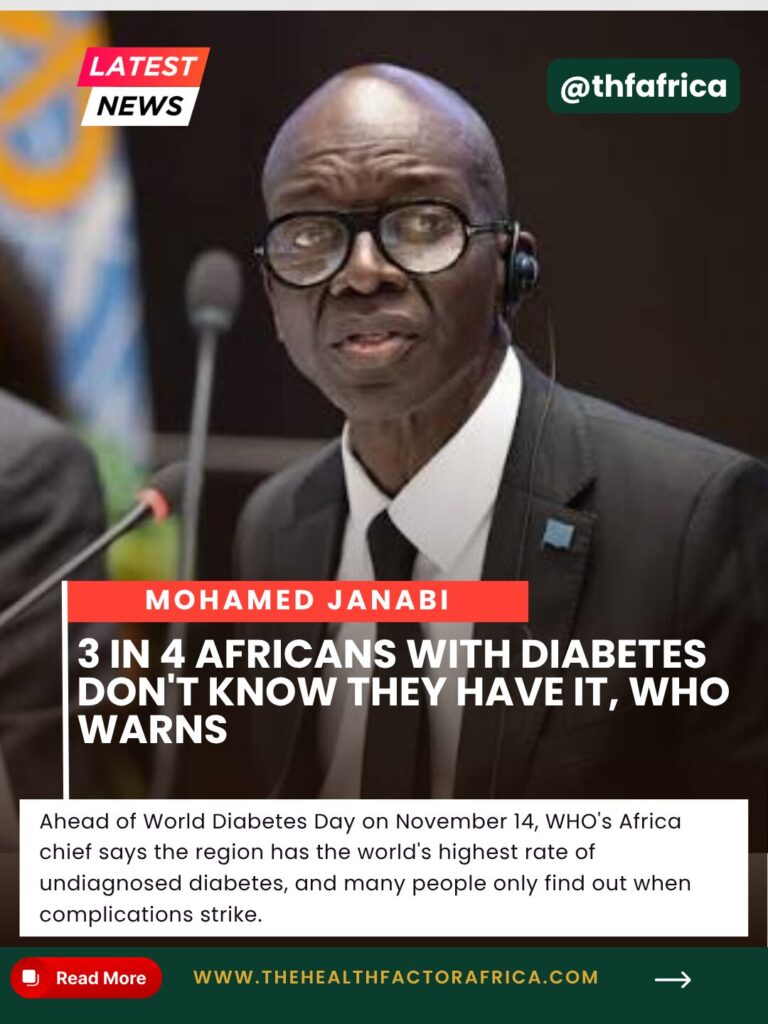
Nearly three in four adults with diabetes in Africa do not know they have it, the World Health Organization has warned. That is the highest share of undiagnosed cases anywhere in the world.
WHO Regional Director for Africa Mohamed Janabi gave the warning ahead of World Diabetes Day on November 14. This year’s theme is “Early Action on Diabetes.”
An estimated 24.6 million African adults aged 20 to 79 had diabetes in 2024, according to the International Diabetes Federation. That number could reach 59.5 million by 2050.
Why late diagnosis is dangerous
Many people only learn they have diabetes when complications appear: kidney failure, blindness, heart disease or amputation.
Warning signs
- Constant thirst
- Frequent urination
- Unexplained weight loss
- Persistent tiredness
- Blurred vision
“Know the symptoms. Do not ignore the warning signs. Seek testing and care early. Encourage others to do the same,” Janabi said.
Get tested even if you feel fine
People at higher risk should be screened even without symptoms. That includes anyone with a family history of diabetes, anyone who is overweight or physically inactive, and anyone with high blood pressure. A simple blood sugar test at a clinic or pharmacy can catch it early.
WHO urged governments to make insulin and essential medicines affordable, expand testing in primary healthcare, and train more health workers.
The Health Factor Africa
Get verified health news, free
One email a week: explainers, myth-checks, and the stories behind the headlines.
Work in health policy, government or an NGO? Get the monthly Policy Brief instead.