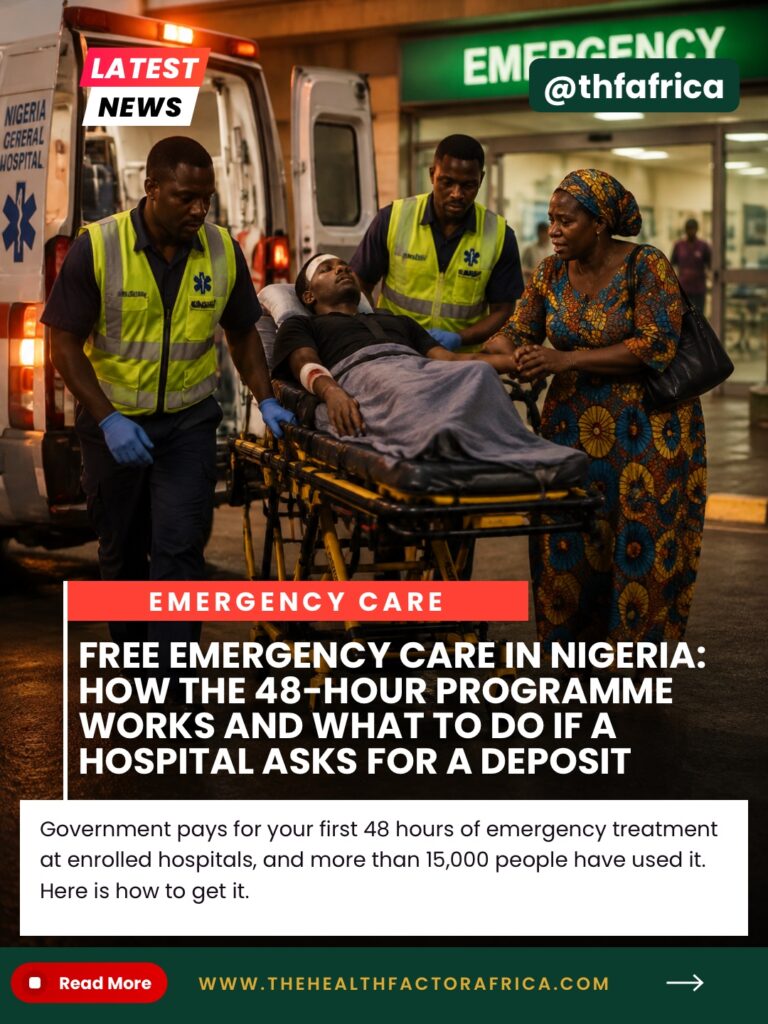
It is 11pm on the Lagos-Ibadan expressway and a bus has just somersaulted. Nobody at the scene is thinking about money, yet the first question at many hospital gates is still “who will pay?” Under the free emergency care programme, the answer for the first 48 hours is supposed to be simple: the government pays.
How free emergency care in Nigeria works
The scheme runs through the National Emergency Medical Services and Ambulance System (NEMSAS) and is paid for from the Basic Health Care Provision Fund. Enrolled hospitals treat the emergency first, then claim the cost of the first 48 hours from the fund. Health Minister Muhammad Ali Pate said on November 10 that more than 15,000 Nigerians have been treated this way across 507 facilities. Programme managers said last year that NEMSAS had reached 30 states and 26 federal tertiary hospitals.
What it covers, and what you pay
Think road crashes, heavy bleeding, labour complications or someone who has suddenly collapsed. For those first 48 hours you should not be asked to pay upfront. After that, normal billing, your insurance or your NHIA plan takes over, so ask early what happens on day three.
How to call for help
Dial 112, the free national emergency line, which routes calls to state emergency centres. Officials admit the line does not always connect, so save your nearest hospital’s emergency number too. NEMSAS has also announced 3581, a free short code for pregnant women who need emergency transport.
If a hospital asks for a deposit
Stay calm and ask plainly whether the facility is part of the NEMSAS free 48-hour programme. The National Health Act already says no hospital may refuse anyone emergency treatment. If you are turned away, note names and times and report to your state ministry of health. Our explainer on what Nigeria’s Emergency Care Bill gets right and wrong covers the penalties lawmakers are now debating, and the Federal Ministry of Health’s update on its 41 health commitments has the latest figures. Driving home this December? Pack our Detty December health checklist too.
This article is for general information and is not a substitute for professional medical advice.
The Health Factor Africa
Get verified health news, free
One email a week: explainers, myth-checks, and the stories behind the headlines.
Work in health policy, government or an NGO? Get the monthly Policy Brief instead.