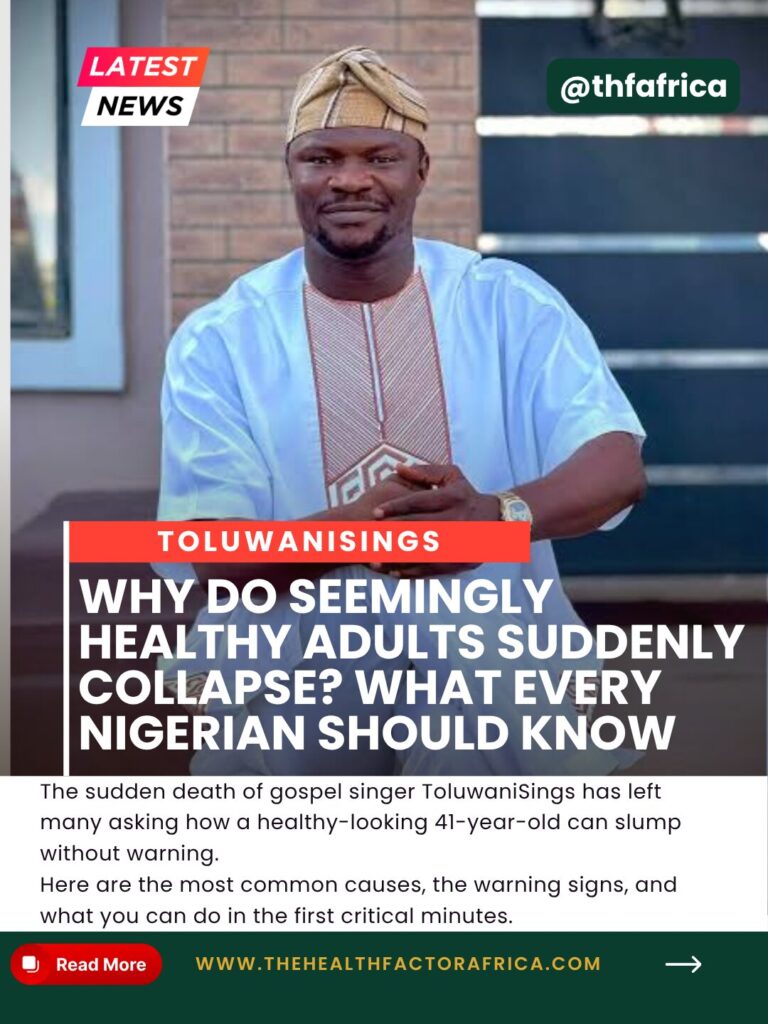
He sang on Tuesday night. By Wednesday morning, he was gone. The cause of ToluwaniSings’ death has not been announced, but his passing has left many Nigerians asking the same question: how does someone who looks perfectly well suddenly collapse?
Doctors usually look at a short list of possibilities.
The heart. The most common cause is sudden cardiac arrest, when the heart’s electrical rhythm goes chaotic and it stops pumping blood. It can be triggered by a heart attack, a thickened heart muscle, or a hidden rhythm problem a person never knew they had.
The brain. A stroke or a burst blood vessel in the brain can cause sudden collapse, often linked to very high blood pressure.
A blood clot. A clot that travels to the lungs can block blood flow within minutes.
The main artery. A tear in the aorta, the body’s largest blood vessel, is rarer but deadly, and also linked to uncontrolled blood pressure.
Warning signs people ignore
Not everyone gets a warning. But many do, and they often brush it off as stress or exhaustion:
- Unusual tiredness that does not go away with rest
- Chest pain, pressure or tightness
- Shortness of breath doing ordinary things
- Fainting or near-fainting
- A racing or fluttering heartbeat
- Sudden severe headache
Know your numbers
High blood pressure is often called a silent killer because many people feel nothing until it is too late. If you are over 30, check your blood pressure at least once a year, even if you feel fine. If you have a family history of heart disease or sudden death, tell your doctor.
The first minutes matter most
If someone collapses and is not breathing normally:
- Shout for help and call 112
- Start pushing hard and fast in the centre of the chest, about two pushes per second
- Keep going until help arrives or the person starts breathing
Do not waste time driving from hospital to hospital without calling ahead. Ask which facility can receive an emergency patient now.
Learning CPR takes a few hours. It can give someone a lifetime.
The Health Factor Africa
Get verified health news, free
One email a week: explainers, myth-checks, and the stories behind the headlines.
Work in health policy, government or an NGO? Get the monthly Policy Brief instead.