Imagine being told your child carries a gene change linked to a serious heart condition, then learning years later that the change was harmless all along.
That happened to people of African ancestry. Some gene variants once blamed for an inherited heart disease turned out to be benign, but the error only became visible once enough African genetic data existed to check.
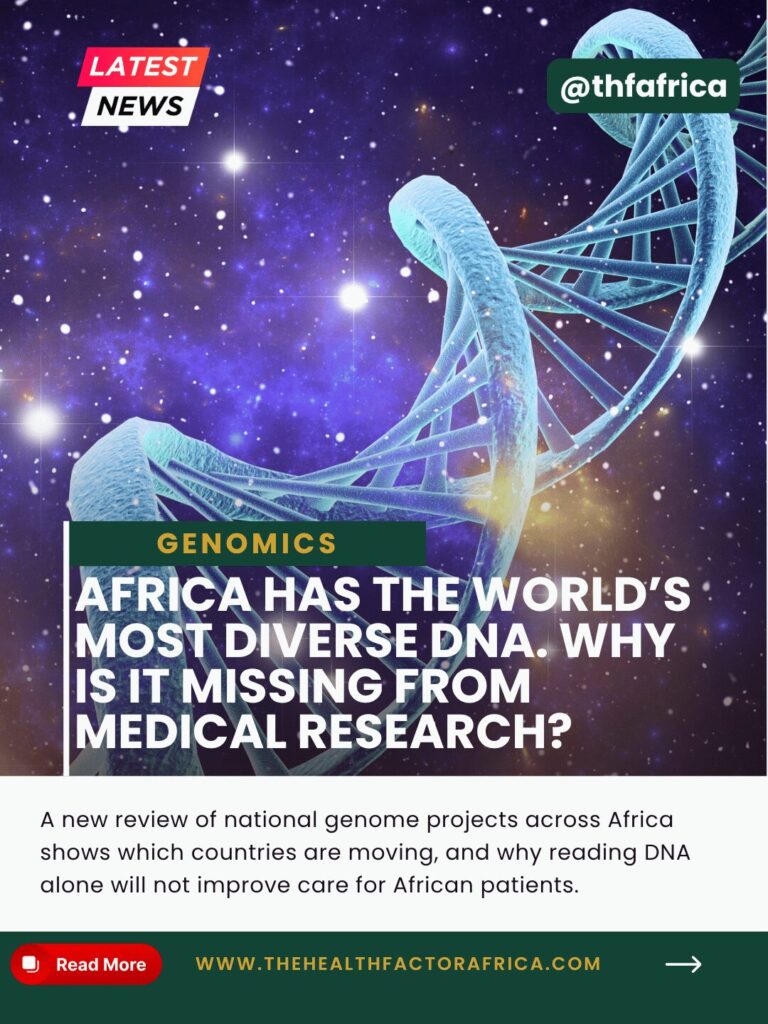
The problem is representation. Africa holds the greatest human genetic diversity on earth, yet only about 0.15% of participants in genome-wide association studies come from the continent. When reference data comes mostly from elsewhere, African patients get less reliable answers.
A new paper in Nature Communications, led by Tanzanian molecular geneticist Mohamed Zahir Alimohamed with co-authors from Egypt, Tunisia, Senegal, Kenya and South Africa, examines how national genome projects could close that gap.
Tunisia, Egypt and Senegal already have national initiatives. Tunisia plans to study both healthy people and patients, helping doctors separate harmless variants from meaningful ones. Egypt is betting on scale across common and rare diseases. Senegal aims to cover 31 ethnolinguistic groups in all 14 regions so no community is left out. Government-led efforts in Tanzania, Kenya and South Africa are at earlier stages.
The authors’ core warning: sequencing is the easy part. Countries also need laboratories, computing systems, trained interpreters and clear rules on consent, privacy and data ownership. Projects that live on short research grants risk losing staff and equipment when the money stops.
They also insist genomics should not compete with malaria, TB or health worker shortages. Start at a sustainable size, focus on local priorities, and share capacity across borders.
Nigeria is not named among the national projects described, despite being Africa’s most populous country and home to hundreds of ethnic groups. That makes the paper’s questions urgent here: Who would be represented? Who would control the data? And would Nigerian patients, not just global science, feel the benefit?
The Health Factor Africa
Get verified health news, free
One email a week: explainers, myth-checks, and the stories behind the headlines.
Work in health policy, government or an NGO? Get the monthly Policy Brief instead.