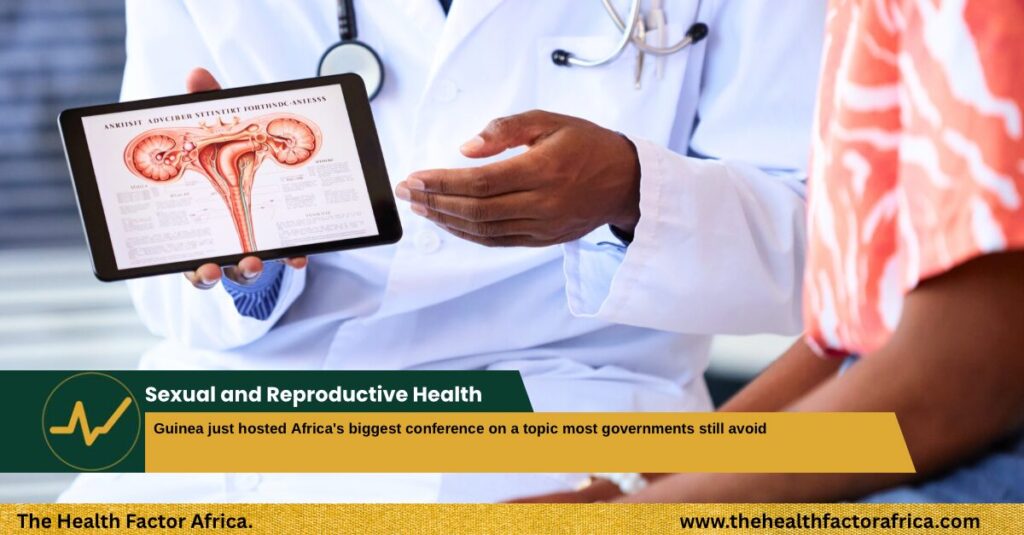
Guinean Prime Minister Amadou Oury Bah opened Africa’s largest conference on sexual and reproductive health and rights in Conakry this week, putting a subject many governments across the region still treat as politically sensitive at the center of an official, high-profile gathering.
Guinea’s health minister used the platform to frame sexual and reproductive health services as inseparable from the broader push for universal health coverage, arguing that as international donors pull back funding, African governments will need to build their own sustainable financing for these services rather than relying on outside support.
Organizers described the moment as urgent rather than symbolic, pointing to overlapping crises across the region — humanitarian emergencies, displacement, and the effects of climate change — that are straining health systems and making it harder for women and adolescents to access reproductive care when they need it most.
What You Can Do
- If you work in health policy or advocacy, watch for outcomes from this conference — commitments made here could shape funding and access to reproductive health services across West Africa.
- If you’re a young person or advocate in the region, look into what sexual and reproductive health services are actually available locally, since national commitments don’t always translate quickly into services on the ground.
This article is for general information on an ongoing regional conference.
The Health Factor Africa
Want the Policy Brief version?
Every explainer gets a shorter, policy-focused brief in your inbox — built for people who need the decision-relevant version fast.