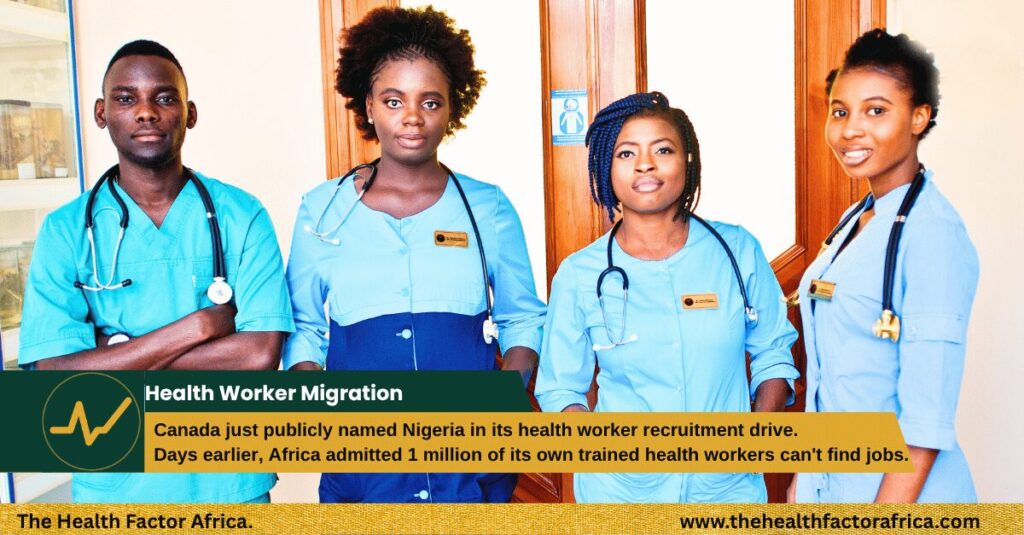
We recently covered African health ministers formally adopting a plan to train 3 million more health workers by 2035, while admitting the continent already has an estimated 1 million trained health professionals sitting unemployed, more than half of new nurses, doctors, and midwives in several countries can’t find work after graduating. Days later, Canada announced exactly who it wants next.
Immigration, Refugees and Citizenship Canada (IRCC) posted on X on August 24 naming five priority categories it’s actively recruiting globally, including from Nigeria: nurse practitioners, dentists, pharmacists, psychologists, and social workers. The broader eligible list under Canada’s Express Entry system extends further, registered nurses, physiotherapists, occupational therapists, medical laboratory technologists, licensed practical nurses, paramedics, and pharmacy technicians. Healthcare and social services has been confirmed as a standing priority category through Canada’s 2026 Express Entry selections, meaning this isn’t a one-off post, it’s an active, ongoing pipeline.
Worth being precise here: being named in this list doesn’t guarantee a job, visa, or permanent residence. Applicants still need to meet immigration requirements and, critically, obtain Canadian recognition or licensing for their professional qualifications, a real hurdle for many internationally trained health workers.
The scale of what’s driving this is stark on Canada’s side too: immigrants already make up roughly 1 in 4 healthcare workers there, including 43% of pharmacists, 45% of dentists, 37% of physicians, and 25% of registered nurses. Canada isn’t quietly absorbing foreign talent, it’s built policy around actively competing for it.
This sits in direct tension with the “ethical health worker mobility” framework Nigeria and Canada signed earlier this year, which emphasized managed migration alongside domestic training investment. An active, public recruitment call naming Nigeria specifically is a different posture than simply not obstructing emigration, worth watching whether the framework’s local capacity-building side keeps pace with this kind of direct competition for the same workforce.
What You Can Do
- If you’re a Nigerian health or social service professional considering this pathway, research Canadian licensing and credential recognition requirements before assuming eligibility, being on the priority list isn’t the same as being approved.
- If you’re staying in Nigeria, know that the employment gap African ministers just admitted to is a real, named policy problem now, not an individual failure to find work.
This article is for general information and does not constitute immigration advice. Consult a licensed immigration consultant or IRCC directly for eligibility guidance specific to your qualifications.
The Health Factor Africa
Want the Policy Brief version?
Every explainer gets a shorter, policy-focused brief in your inbox — built for people who need the decision-relevant version fast.