You have stooling and stomach cramps. You walk to the chemist, describe your symptoms, and leave with ciprofloxacin. No test, no prescription, no questions. You take three days of tablets, feel better, and stop.
That everyday routine is how superbugs are born.
What the CDC found
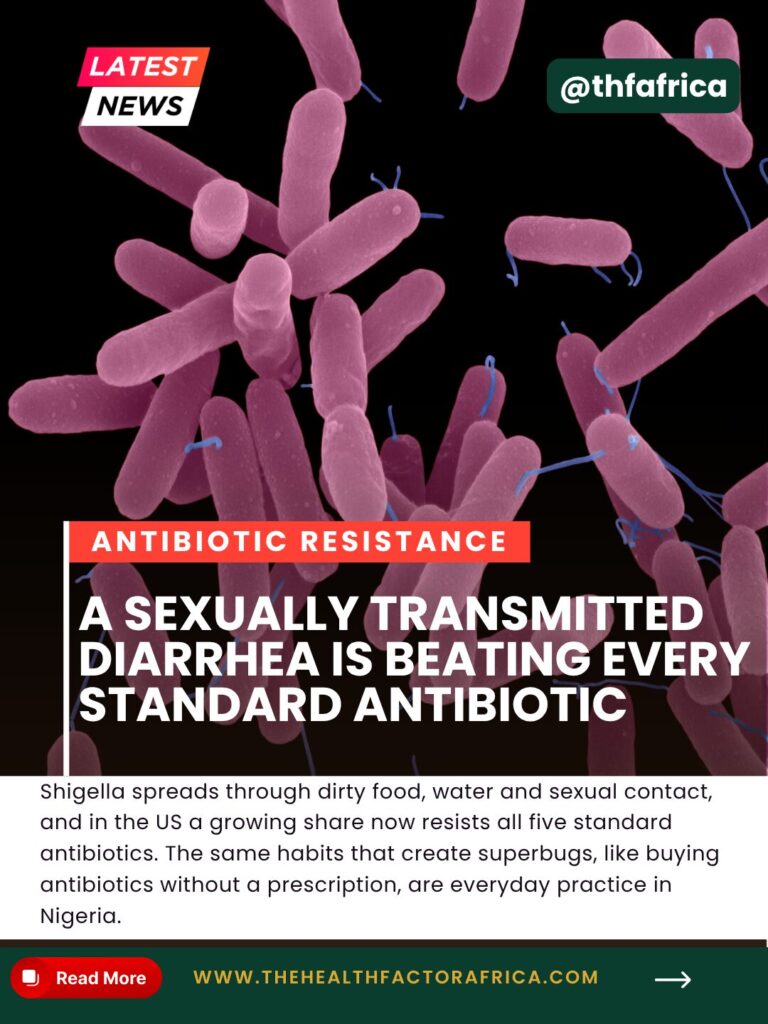
A report from the US Centers for Disease Control and Prevention analyzed nearly 17,000 samples of Shigella, a bacterium that causes bloody diarrhea, fever and cramps. The share classified as extensively drug-resistant (XDR) rose from 0% in 2011 to 2015 to 8.5% in 2023.
These strains resist all five antibiotics commonly used against Shigella: ampicillin, azithromycin, ceftriaxone, ciprofloxacin and co-trimoxazole. More than a third of patients with XDR infections were hospitalized, and there is no FDA-approved oral antibiotic for them.
How Shigella spreads
It takes very few bacteria to make someone sick. Shigella spreads through contaminated food and water, unwashed hands, and close personal contact, including sexual contact. In the US, most XDR cases were in adult men.
Why this matters in Nigeria
Shigella is a familiar cause of dysentery here, especially where clean water and sanitation are limited. And the conditions that breed resistance are everywhere: antibiotics sold over the counter, half-finished courses, and drugs taken for illnesses antibiotics cannot cure. Resistance does not need a passport. Once strains like these spread, the cheap tablet at the chemist simply stops working.
Protect yourself
- Wash hands with soap after using the toilet and before eating
- Drink safe water and eat food that is well cooked
- For diarrhea, start with oral rehydration salts (ORS) and plenty of fluids
- See a health worker if there is blood in stool, high fever, or symptoms beyond a few days
- Never take antibiotics without a prescription, and always finish the full course
Most Shigella infections clear up on their own within a week. The goal is to keep the antibiotics working for the cases that truly need them.
The Health Factor Africa
Get verified health news, free
One email a week: explainers, myth-checks, and the stories behind the headlines.
Work in health policy, government or an NGO? Get the monthly Policy Brief instead.