We’ve written before about how misinformation follows public health crises in Nigeria, unverified cure claims surfacing after a public appeal, viral rumors exaggerating real but limited cases into sweeping falsehoods. A Nigerian communications scholar argues this pattern is central to the country’s maternal health crisis itself, not a side issue.
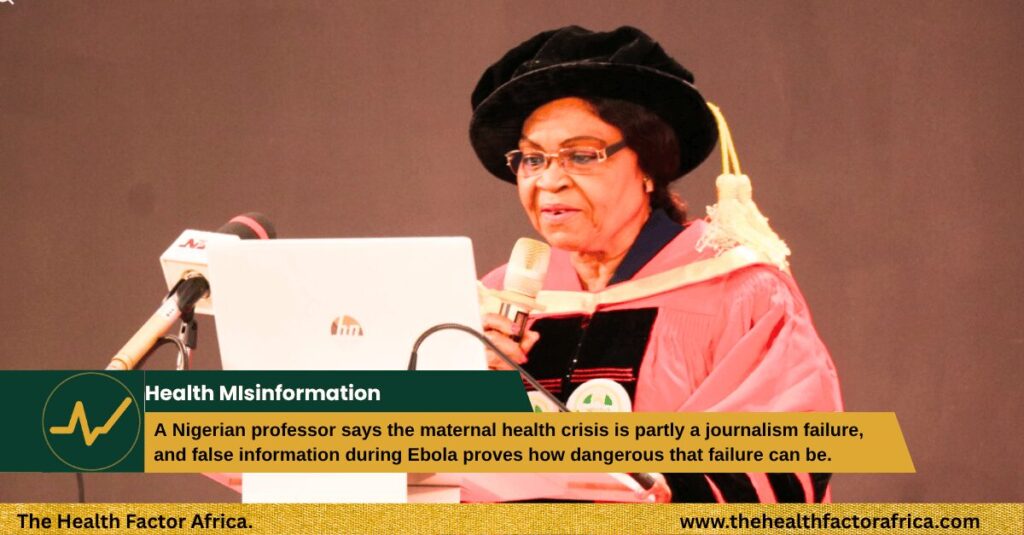
Prof. Chidinma Onwubere of the National Open University of Nigeria, delivering her inaugural lecture in Abuja, drew on her own background in nursing, broadcasting, and law to argue that “Nigeria’s maternal and child health challenges are not only healthcare system failures but also communication failures which responsible broadcasting can conveniently salvage.” She traced this to her early community health work, where she found pregnant women avoiding nutritionally important foods like eggs, snails, and vegetables because of traditional beliefs, addressed only through direct community education and role-play interventions.
Onwubere identified preference for traditional birth attendants, poor facility access, weak infrastructure, poverty, and information gaps as the core drivers of Nigeria’s maternal health toll. Her sharper critique was aimed at journalism itself: most health messaging in Nigeria, she said, is fragmented, crisis-driven, and urban-centred, framing healthcare as an obligation rather than informing citizens of entitlements they actually have to skilled care, emergency services, and dignity.
She also named a specific danger directly relevant to outbreak coverage we’ve done this year: false health information spread during the Ebola outbreak, demonstrating how quickly digital misinformation can turn a health crisis into a communication crisis. Her call to journalists was direct, move beyond routine reporting, acquire the specialised knowledge to interpret medical data accurately, and use evidence and lived experience to hold health authorities accountable rather than simply relaying announcements.
What You Can Do
- Question health information that spreads without a named source or verifiable data, especially anything urgent-sounding shared via WhatsApp or social media.
- Support health journalism that explains entitlements, not just emergencies. Onwubere’s argument is that citizens need to know what care they’re owed, not just what crisis is unfolding.
This article is for general information on health communication research. For maternal and child health guidance, consult a qualified health worker.
The Health Factor Africa
Get verified health news, free
One email a week: explainers, myth-checks, and the stories behind the headlines.
Work in health policy, government or an NGO? Get the monthly Policy Brief instead.