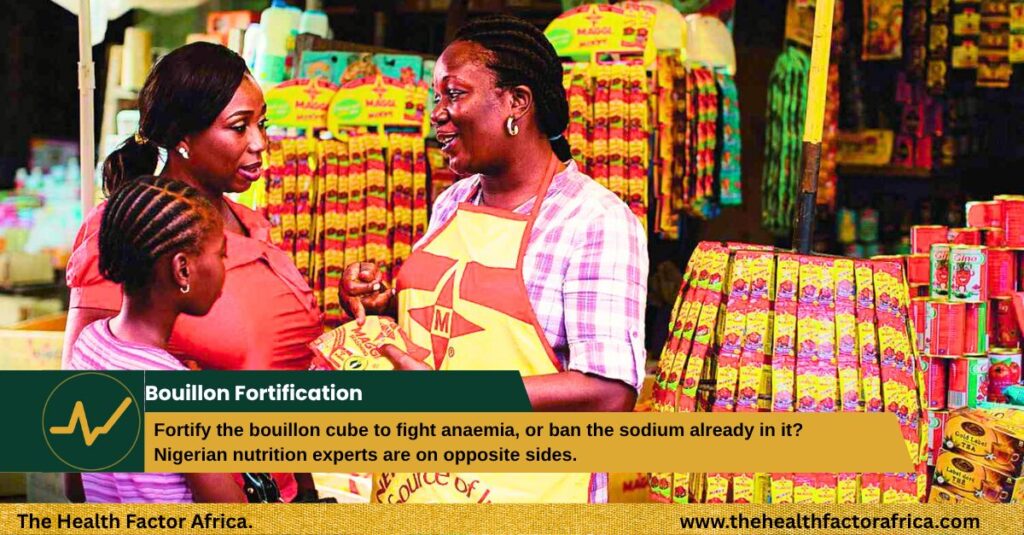
Nigeria set voluntary standards in September 2024 allowing bouillon cubes to be fortified with iron, zinc, folic acid, and vitamin B12. Two years on, nutrition specialists say voluntary uptake has moved too slowly, and are pushing government to make it mandatory. A food scientist at Corporate Accountability and Public Participation Africa just published a public warning that doing so could be dangerous. Both sides have real evidence behind them.
The case for mandatory fortification centres on scale. Nigeria records roughly 7.5 million births a year, including an estimated 11,000 infants born annually with neural tube defects linked to folate deficiency, conditions where adequate folic acid before and during early pregnancy can cut risk by up to 70%. More than 40% of Nigerian women of reproductive age don’t get enough folate. A rigorous randomised controlled trial (CoMIT, run with UC Davis and Ghanaian researchers) found fortified bouillon an effective delivery method precisely because it’s already used in nearly every household, reaching people supplement programmes requiring clinic visits often miss.
The case against centres on sodium. A single bouillon cube can contain up to 1,200mg of sodium, 60% of WHO’s recommended daily limit from one source alone, and Nigerian cooking typically combines several cubes with added salt per meal. High sodium intake in pregnancy is linked to gestational hypertension and preeclampsia, and hypertensive disorders already account for 16.7% of Nigeria’s maternal deaths. Critics also point to an uncomfortable data point: despite voluntary iron fortification already in place, anaemia prevalence among Nigerian women roughly doubled between 2001 and 2021, suggesting fortification alone hasn’t solved the underlying problem, which they attribute more to food insecurity affecting 79% of Nigerian households.
Critics of mandatory fortification propose alternatives: mandatory sodium limits and front-of-pack warning labels, fortifying whole staples like cassava and maize instead, and expanding free prenatal supplements through primary health centres.
This remains an open, unresolved policy question, not settled science on either side, and it sits inside the same maternal mortality crisis we’ve covered before in Nigeria.
What You Can Do
- If you’re pregnant, ask your antenatal provider about folic acid and B12 status directly, rather than relying on fortified seasoning alone.
- Watch your sodium intake in pregnancy specifically, regardless of how this policy debate resolves, and discuss any blood pressure concerns with your provider early.
This article presents both sides of an active nutrition policy debate and does not constitute medical advice. Consult a qualified healthcare provider about your specific nutrition needs during pregnancy.
The Health Factor Africa
Want the Policy Brief version?
Every explainer gets a shorter, policy-focused brief in your inbox — built for people who need the decision-relevant version fast.