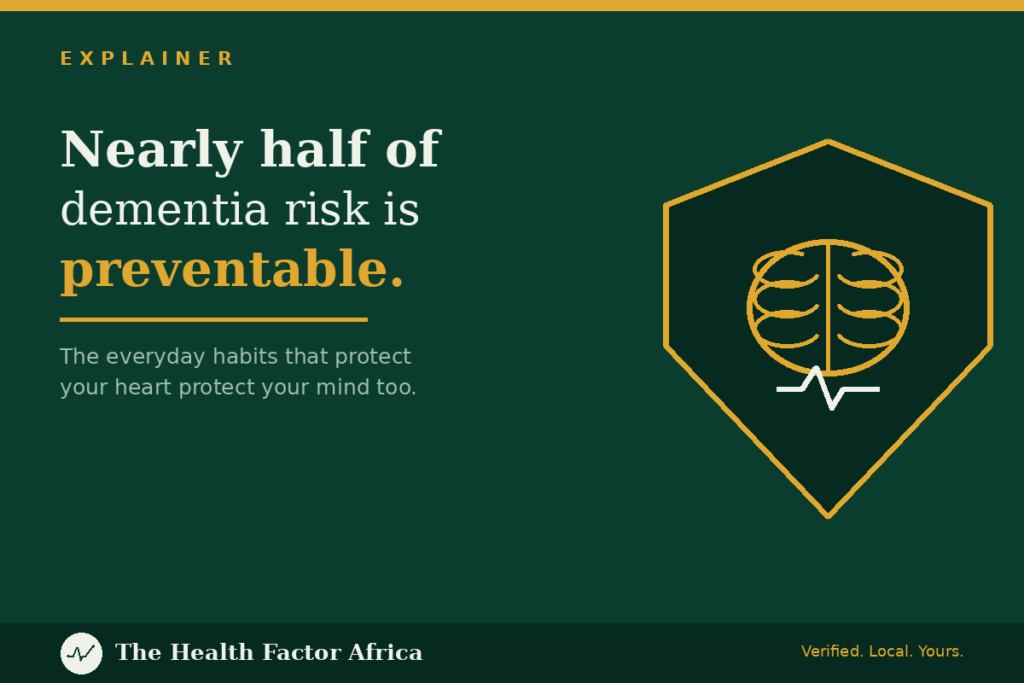
The World Health Organization has updated its guidelines on dementia, and the headline is one of the most hopeful in health today: up to 45% of dementia risk worldwide could be prevented or delayed by addressing everyday health factors [WHO, July 2026].
That is not a promise that any one person can cut their own risk by half. The 45% figure is a population-level estimate — what could happen across whole societies if these risks were reduced [WHO, 2026]. But it carries a powerful message: dementia is not simply fate or old age. Much of the risk is tied to conditions we can act on.
What raises the risk
The WHO points to a set of modifiable factors, most of which are already familiar to us: high blood pressure, diabetes, smoking, harmful alcohol use, physical inactivity, social isolation, hearing loss, and air pollution [WHO, 2026].
Look at that list closely. High blood pressure and diabetes are rising fast across Nigeria. Many of us live with air pollution from generators, traffic, and cooking smoke. These are not distant Western problems — they are daily realities here, which means the opportunity to protect ourselves is also here.
One thing the WHO now advises against
The updated guidelines specifically advise against taking routine vitamin or supplement pills to prevent dementia [WHO, 2026]. There is no strong evidence they work for this purpose. That matters in a market full of “brain booster” products promising to protect memory. Save your money — the evidence points elsewhere.
What actually helps
The protective steps are the same ones that guard your heart and body overall:
Control blood pressure and blood sugar. Get them checked, and if you are on medication, take it as prescribed. These two alone are among the biggest levers.
Keep moving. Regular physical activity — even brisk walking — supports brain health.
Protect your hearing, and stay socially connected. Untreated hearing loss and isolation both raise risk. Time with family and community is not just pleasant; it is protective.
Avoid tobacco, and limit alcohol.
The bigger picture
Dementia is often seen as something that simply happens with age, and families carry the weight quietly. This new guidance reframes it: while not every case can be prevented, a large share of risk is linked to conditions we already know how to manage. The same habits that protect your heart protect your mind.
.