The WhatsApp message always reads the same way: he was fine yesterday. A 38-year-old colleague, a cousin just back from five-a-side football, a neighbour who went to sleep and never woke. Sudden death in young adults used to feel rare. Nigerian doctors say it is becoming more common.
Speaking at the 2026 Arise Women Conference in Abuja, cardiologist Dr Jane Ajuluchukwu described sudden death as an unexpected, non-violent death within 24 hours of symptoms starting, and said deaths within the first hour are more likely to come from the heart. Cardiovascular disease kills about 17 million people worldwide each year, and she said sudden deaths make up roughly a quarter of that.
Who is most at risk of sudden death in young adults?
The drivers are familiar: high blood pressure, diabetes, obesity, high cholesterol, physical inactivity and an enlarged heart. As we reported, doctors are now seeing high blood pressure in Nigerians in their 20s. Men are more likely to die suddenly than women, especially after 40, and Ajuluchukwu blamed a culture that tells men not to admit they are unwell. “It is men that are killing themselves because they are not paying enough attention to their health,” she said. A close relative who died suddenly before 50 is a red flag to tell your doctor about.
Which checks are worth doing?
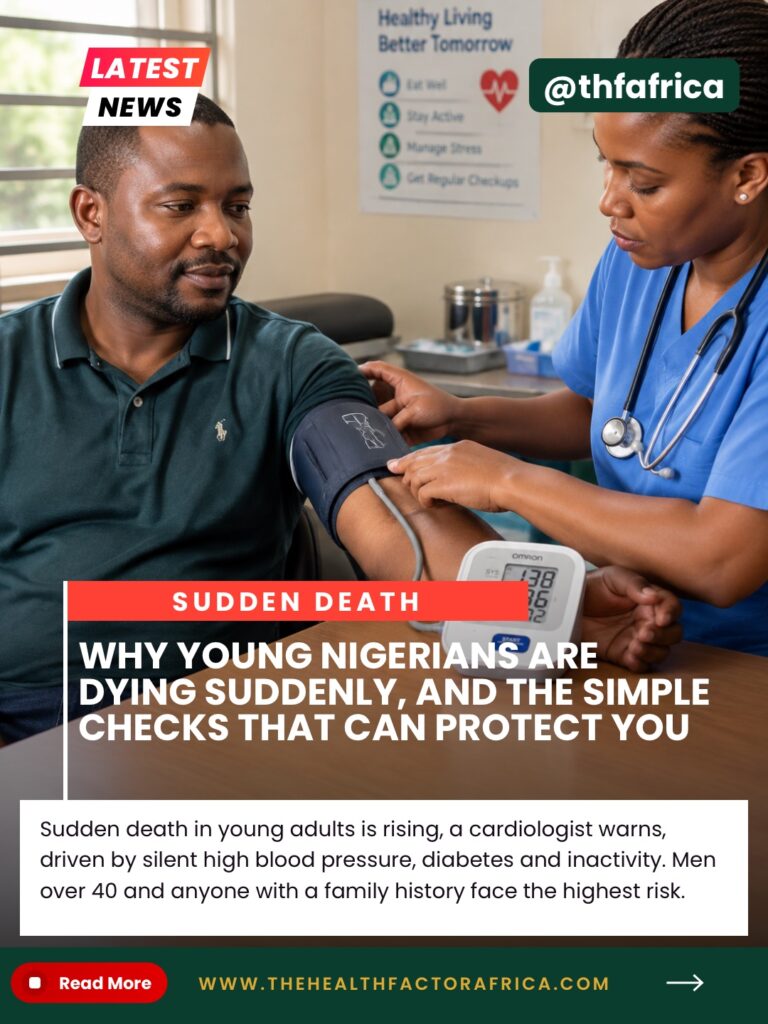
Most of these risks are silent, so the only way to know is to measure. Check your blood pressure at least once a year from age 30, more often if it runs in your family. Ask for a blood sugar test and a cholesterol (lipid profile) test. If a relative died suddenly young, ask whether you need an ECG or a heart scan. The WHO fact sheet on cardiovascular disease says most heart disease can be prevented by tackling tobacco, unhealthy diet, inactivity and harmful alcohol use.
Already on blood pressure or diabetes medicine? Take it daily, even when you feel fine. Our explainer on high blood pressure, the silent killer one in three Nigerians lives with shows why feeling well is not the same as being well.
This article is for general information and is not a substitute for professional medical advice.
The Health Factor Africa
Stay on top of the claims
One email a week: explainers, myth-checks, and the stories behind the headlines.