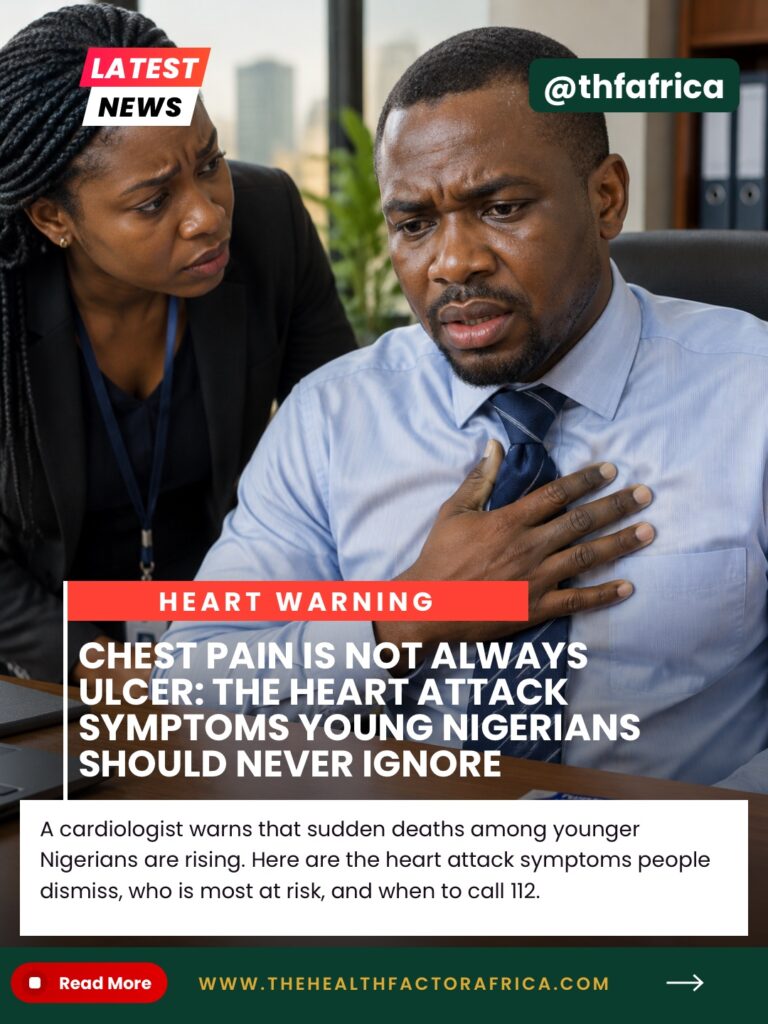
It starts as a heaviness in the middle of your chest, or a burning high up in your belly, after a long day. You blame ulcer, buy an antacid and lie down. For some Nigerians, that is the last decision they make.
At the 2026 Arise Women Conference in Abuja, cardiologist Dr Jane Ajuluchukwu warned that sudden deaths are rising, and that “many people who are dying suddenly are young”. Her explanation is simple: “The trend is increasing. It is because the risk factors are increasing.” Knowing the heart attack symptoms people mistake for ulcer or tiredness could save a life.
Heart attack symptoms people mistake for ulcer
A heart attack does not always look like the crushing chest pain in films. The World Health Organization lists) pain or discomfort in the centre of the chest; pain spreading to the arm, left shoulder, jaw or back; shortness of breath; nausea; light-headedness; a cold sweat; and turning pale. Ajuluchukwu adds unusual tiredness and fainting. Women are more likely to feel breathlessness, nausea, or back and jaw pain.
Who is at higher risk?
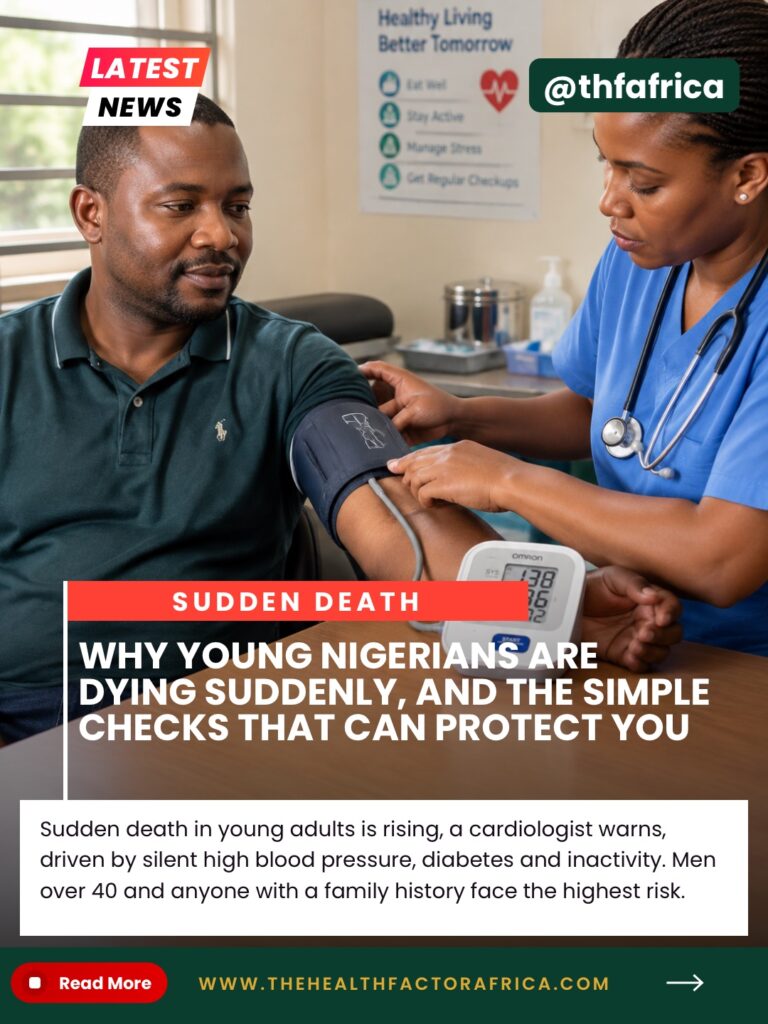
High blood pressure, diabetes, obesity, high cholesterol, physical inactivity and an enlarged heart all raise the risk. So does a family history of sudden death, especially a close relative who died before 50. Men are more likely to die suddenly than women, particularly after 40. And as we reported, high blood pressure is now showing up in Nigerians in their 20s.
What should you do?
If the discomfort is new or unusual, or comes with sweating, breathlessness or fainting, do not wait for it to pass. Call 112, Nigeria’s emergency number, or get to the nearest hospital immediately. Our explainer on why seemingly healthy adults suddenly collapse covers what bystanders can do.
For everyone else: check your blood pressure and blood sugar regularly, take prescribed medicines every day, and keep moving. Ulcer can wait for a test. Your heart cannot.
This article is for general information and is not a substitute for professional medical advice.
The Health Factor Africa
Stay on top of the claims
One email a week: explainers, myth-checks, and the stories behind the headlines.