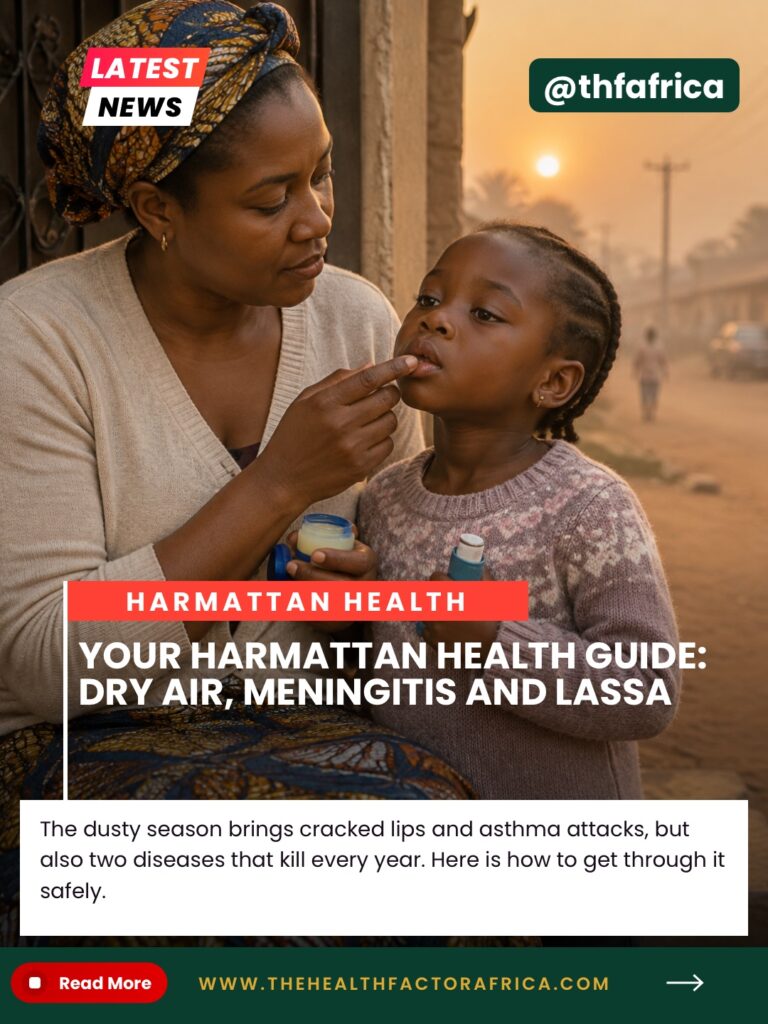
You know harmattan has arrived when your lips crack overnight, the morning sky turns hazy, and everyone in the house starts coughing. For most of us it is an inconvenience. For some, it is dangerous.
Skin, eyes and breathing
Dry, dusty air pulls moisture from your body, and children and older people dry out fastest. Drink water even when you are not thirsty, use petroleum jelly or a simple moisturiser on lips and skin, and avoid rubbing itchy eyes with dusty hands. If you or your child has asthma, keep the inhaler close, cover the nose and mouth on dusty days, and see a doctor if attacks become more frequent.
Meningitis
Northern Nigeria sits in Africa’s meningitis belt, and meningitis season usually begins around November and builds through the dry months. In the 2023/2024 season, Nigeria recorded 3,644 suspected cases and 306 deaths. The germs spread more easily in crowded, poorly ventilated rooms, so NCDC advises opening windows, avoiding overcrowding and keeping children’s meningitis vaccines up to date. A sudden fever with headache and a stiff neck is an emergency. Do not assume it is malaria.
Lassa fever
NCDC says Lassa cases rise between November and April, as rats move closer to homes in search of food. The virus spreads through food or items contaminated with rat urine or droppings. Store grains and garri in covered containers, keep your surroundings clean, and do not dry food on open ground. Cover leftover food and drinking water at night. Lassa can be treated when caught early, so a fever that does not respond to malaria treatment needs a test.
Skip the self-medication
Harmattan is also the season of leftover antibiotics and roadside drugs. NCDC warns against self-medication. If something feels wrong, go to a health facility or call the NCDC toll-free line, 6232.
This article is for general information and is not a substitute for professional medical advice.
The Health Factor Africa
Stay on top of the claims
One email a week: explainers, myth-checks, and the stories behind the headlines.