In 2014, Nigeria stopped Ebola after a single traveller brought it into a Lagos private hospital. Twelve years later, the country faces that test again.
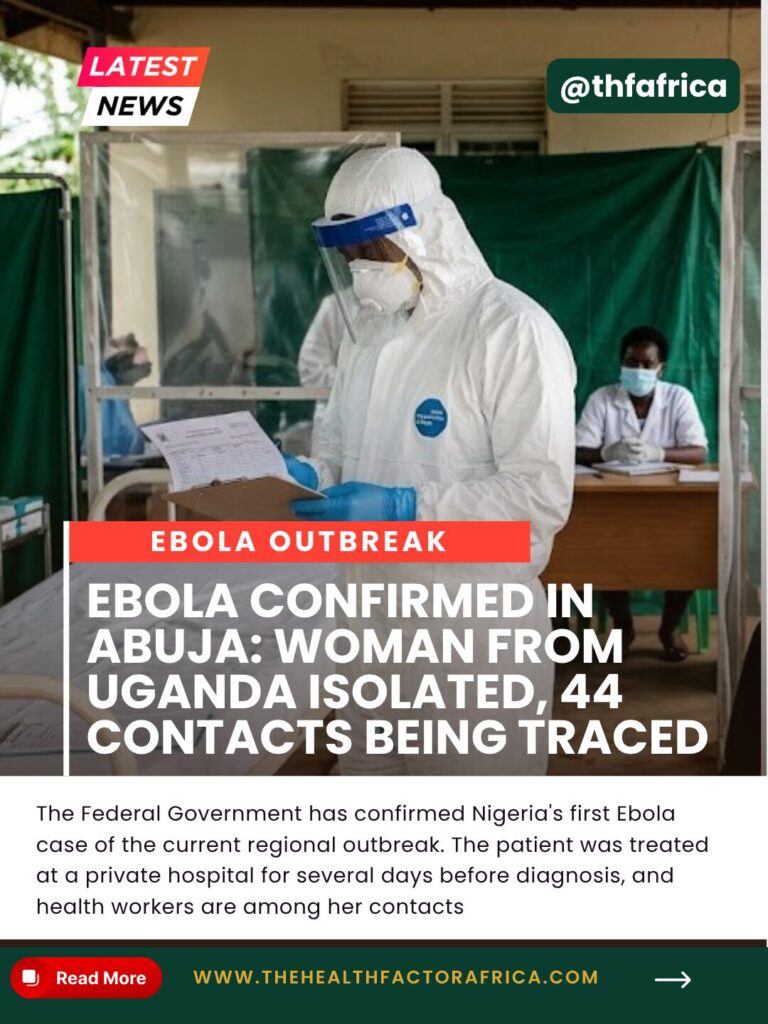
The Federal Government on Tuesday confirmed a case of Ebola disease in the Federal Capital Territory. The patient, a woman who recently arrived in Nigeria on an international flight from Uganda, was admitted to a private hospital in Abuja and received care for several days before laboratory tests confirmed the diagnosis. Peoples Gazette, citing officials, reported the hospital as Nizamiye Hospital.
She is now in isolation and receiving treatment.
The contacts
Health officials have identified 44 close contacts so far, including health workers, other patients, caregivers and people who travelled with her. Teams from the Federal Ministry of Health, the Nigeria Centre for Disease Control and Prevention (NCDC) and the FCT Health Services Secretariat are tracing and monitoring them.
The government has not said which strain of Ebola caused the infection. The outbreak spreading in East and Central Africa, which has now reached Kenya, is driven largely by the Bundibugyo strain, for which there is no approved vaccine or treatment.
What to watch for
Symptoms can appear 2 to 21 days after exposure: fever, severe weakness, headache, vomiting and diarrhoea.
What to do
- Wash your hands often with soap and water
- Avoid contact with the blood or body fluids of anyone who is sick
- If you develop symptoms after possible exposure, avoid close contact with others and call NCDC on 6232 before going to a hospital
- If public health officials contact you, cooperate fully
For health workers
The government has placed all public and private facilities on high alert. Keep a high index of suspicion, ask about recent travel, isolate suspected cases immediately and follow strict infection prevention protocols.
Minister Pate urged Nigerians to remain calm. Nigeria has beaten Ebola before, with fast tracing and honest reporting. That is the job now.
The Health Factor Africa
Get Outbreak Watch in your inbox
New outbreaks, new data, sent the moment we publish.