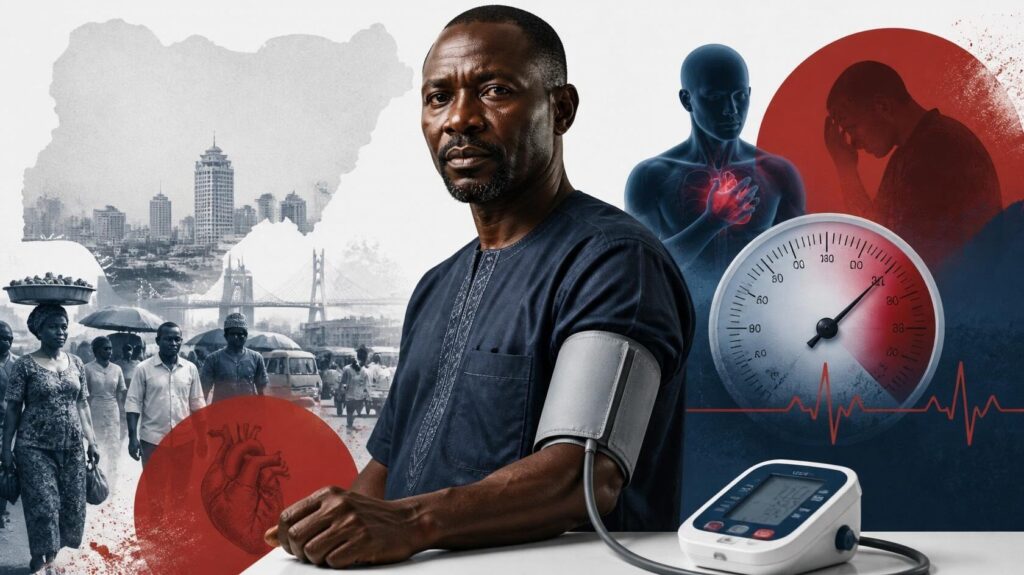
High blood pressure is one of the most common health conditions in Nigeria — and one of the most dangerous, precisely because it so often gives no warning at all.
According to the Federal Ministry of Health’s 2025 State of Health of the Nation Report, at least 4 in 10 Nigerian adults live with high blood pressure [FMoH, 2025]. Many of them feel completely fine. That is exactly why doctors call it “the silent killer.”
What is high blood pressure?
Your heart pumps blood through your body, and that blood pushes against the walls of your blood vessels as it moves. Blood pressure is a measure of that push. When the pressure stays too high, day after day, it quietly damages your blood vessels, your heart, your kidneys, and your brain.
Blood pressure is written as two numbers, like 120/80. Generally, a reading consistently at or above 140/90 is considered high, though your doctor will interpret your numbers based on your full health picture.
Why it’s so dangerous
Because high blood pressure usually causes no symptoms, most people don’t know they have it. But the damage continues silently. In Nigeria, hypertension is linked to up to 80% of stroke cases in some hospital studies [FMoH, 2025]. It is also a leading cause of heart failure, kidney disease, and sudden death.
You cannot feel your blood pressure. The only way to know is to measure it.
Who is at risk
The conditions driving high blood pressure across Nigeria are increasingly part of modern life: high salt intake, unhealthy diets, tobacco use, harmful alcohol use, physical inactivity, and rising obesity — especially in our growing cities [FMoH, 2025]. A family history of hypertension also raises your risk.
What you can do
• Know your numbers. Get your blood pressure checked. A nurse at your nearest primary health centre (PHC) can do it, often at little or no cost. If you’re over 30, or have any risk factors, make it a regular habit.
• Cut the salt. Reduce added salt, seasoning cubes, and salty processed foods. This is one of the most powerful single changes you can make.
• Move your body. Regular activity — even brisk walking most days — helps lower blood pressure.
• Watch alcohol and quit tobacco. Both raise your pressure directly.
• If you’re diagnosed, take your medication. This is critical: because hypertension has no symptoms, many people stop their medicine when they “feel fine.” That is when strokes happen. Take it exactly as prescribed, every day, for life if needed.
The bottom line
High blood pressure is common, silent, and serious — but it is also manageable. The people who do well are simply the ones who know their numbers and act on them. A five-minute check at a health centre could be the most important thing you do for your health this year.