We’ve traced this pattern across the continent this year: US aid cuts weakening outbreak surveillance in DRC, and HIV patients in northern Nigeria turning to unproven faith healers after PEPFAR funding disruptions. In Sudan, the same global funding collapse is now closing health facilities outright.
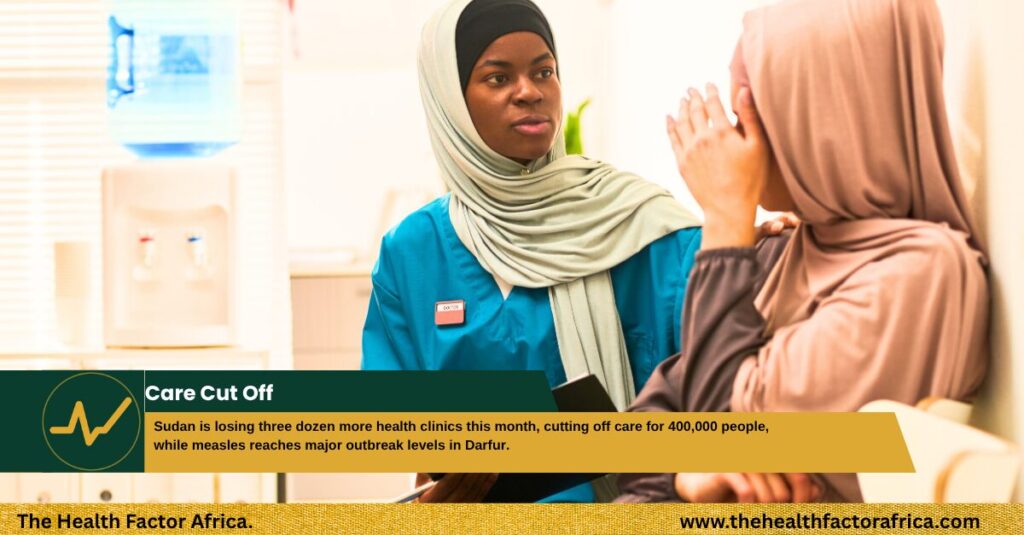
An additional three dozen health facilities serving more than 400,000 people are closing this year, according to aid groups including the International Rescue Committee (IRC) and Doctors Without Borders (MSF). This lands on a health system already devastated: Sudan’s war, now past three years, has killed at least 59,000 people and displaced roughly 13 million, and by September 2024 up to 70 to 80% of health facilities in the worst-hit areas were already closed or barely functioning. IRC East Sudan director Mohammed Mahdi said funding cuts are forcing the closure of 36 IRC-supported facilities and sites alone, cutting off an estimated 473,700 people from essential services, with any remaining bridge funding expected to last only through the end of September.
The root cause is specific: grants to many organisations in Sudan ended in June following last year’s announced US aid cuts, and healthcare providers couldn’t secure alternative funding, while several major European donors also reduced their aid spending. In Um Rakuba camp, sheltering roughly 17,000 displaced people, the number of aid organisations operating in and around the camp has fallen from about 35 in 2021 to fewer than 10 today, leaving a single MSF-supported hospital as, in the words of MSF’s Fabrizio Locuratolo, “now the only lifeline left” for refugees and residents.
The clinical consequences are already visible. MSF’s Ali Almohammed says measles has reached “major outbreak level” in Darfur, with roughly 75% of patients unvaccinated, alongside active cholera and malaria outbreaks across the country, exactly the kind of surveillance and response gap we’ve documented elsewhere this year when funding disappears faster than health systems can adapt.
What You Can Do
- If you’re able to support humanitarian health response in Sudan, organisations like MSF and IRC are explicit that funding gaps, not lack of need, are driving these closures.
- Follow international pressure efforts on the Sudan conflict. Continued war is the underlying driver preventing health infrastructure from being rebuilt even where funding exists.
This article is for general information on an active humanitarian crisis. For ways to support the response, consult MSF, IRC, or other established humanitarian organisations directly.
The Health Factor Africa
Get Outbreak Watch in your inbox
New outbreaks, new data, sent the moment we publish.