Nigeria’s drug agency had a busy week. On August 17, NDLEA publicly incinerated 329,865 kilograms of seized drugs, cocaine, heroin, meth, opioids, and cannabis strains like “Canadian Loud” and skunk, worth an estimated ₦301 billion, at Navy Town in Lagos, acting on a Federal High Court order. The same week, its Edo State command destroyed two cannabis farms totaling 1.85 hectares, with an estimated yield of 4,629 kilograms, and arrested 10 suspected traffickers.
NDLEA Chairman Buba Marwa framed the Lagos burn as a bold statement of Nigeria’s resolve to deny criminal enterprises their resources. Customs Comptroller-General Bashir Adeniyi went further, linking the drug trade directly to Nigeria’s violent non-state actors: bandits, kidnappers, and insurgents, he said, run on this money.
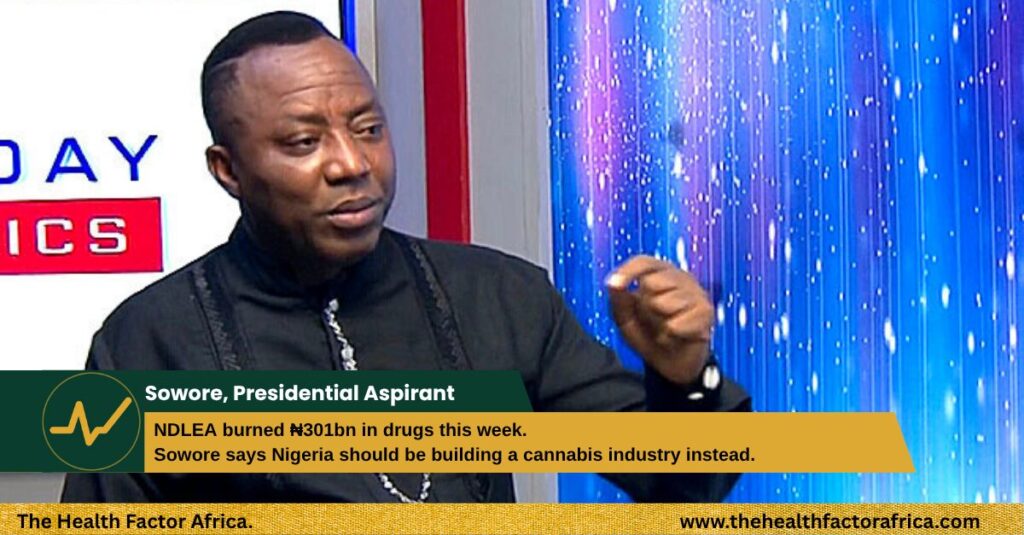
Not everyone agreed with the method. Activist and AAC presidential candidate Omoyele Sowore criticized the Edo farm destruction specifically, calling it economically wasteful at a time when Nigeria is battling widespread poverty. His argument: legalize and regulate cannabis instead, invest in its medicinal and industrial potential, and build an industry rather than repeatedly burning one down. “You cannot burn your way out of poverty,” he said.
This is the same tension we flagged when comparing Nigeria’s 15-years-to-life cannabis penalties against America’s shift toward daily, normalized use: Nigeria already has millions of cannabis users despite the law, and the debate over prohibition versus regulation isn’t going away just because the fire does its job for one week.
What You Can Do
• Know the current law hasn’t changed. Cannabis cultivation and possession remain fully criminalized in Nigeria regardless of this debate.
• Follow the legalization conversation critically. Nigeria has stalled on medical cannabis bills twice before; watch whether this moment produces more than commentary.
The Health Factor Africa
Stay on top of the claims
One email a week: explainers, myth-checks, and the stories behind the headlines.