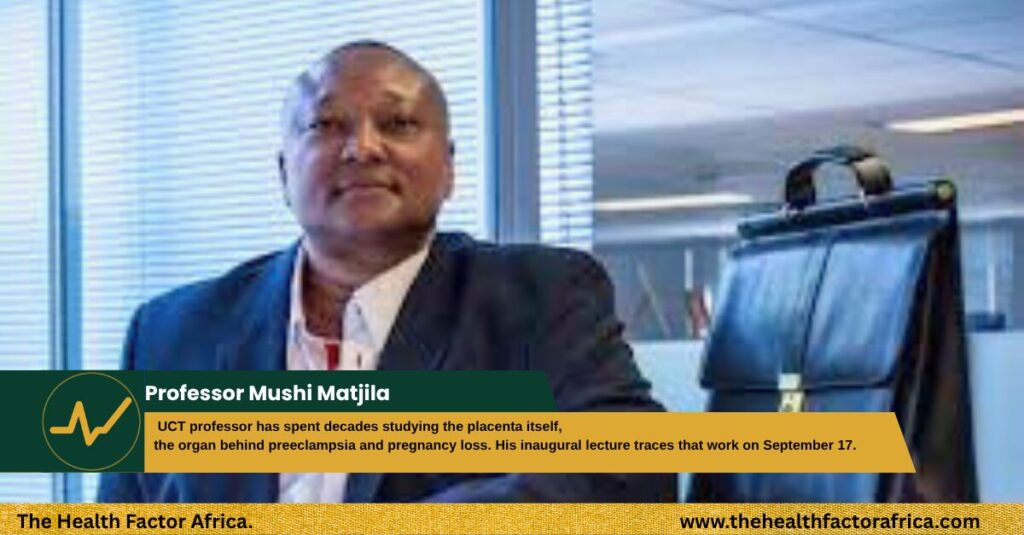
Professor Mushi Matjila, head of the Department of Obstetrics and Gynaecology at the University of Cape Town and a consultant at Groote Schuur Hospital, delivers his inaugural lecture on September 17, focused on research most people never hear about until something goes wrong in pregnancy: the biology of the placenta itself.
His lecture centres on kisspeptin and related molecules at what researchers call the maternal-fetal interface, work directly relevant to preeclampsia, recurrent pregnancy loss, and gestational diabetes, three conditions responsible for a significant share of pregnancy complications and maternal deaths across Africa. Matjila is director and co-principal investigator of the Human African Molecular PLacental REsearch PlaTform (HAMLET) and co-founder of the African Placenta Research Network, initiatives specifically built to generate placental research data from African populations rather than relying entirely on studies conducted elsewhere.
That distinction matters for the same reason we’ve traced in other African-led research efforts this year: conditions like preeclampsia can present differently across populations, and research generated primarily in other regions doesn’t always translate cleanly to African patients. Matjila has also contributed to national health research policy and postgraduate training alongside his clinical work, positioning his lecture as much about building research capacity as reporting individual findings.
What You Can Do
- If you’re pregnant, know the warning signs of preeclampsia, high blood pressure, swelling, severe headaches, and vision changes, and report them to your antenatal provider immediately rather than waiting.
- Support African-led placental and maternal health research initiatives like HAMLET; population-specific data is what eventually improves screening and treatment guidance for conditions like preeclampsia.
This article is for general health education. If you are pregnant and experiencing symptoms of preeclampsia, seek medical attention immediately.
The Health Factor Africa
Stay on top of the claims
One email a week: explainers, myth-checks, and the stories behind the headlines.