We recently covered how Africa is growing more tobacco than ever while importing more cigarettes. WHO’s newest publication puts a specific, personal number behind why that matters for anyone trying to conceive.
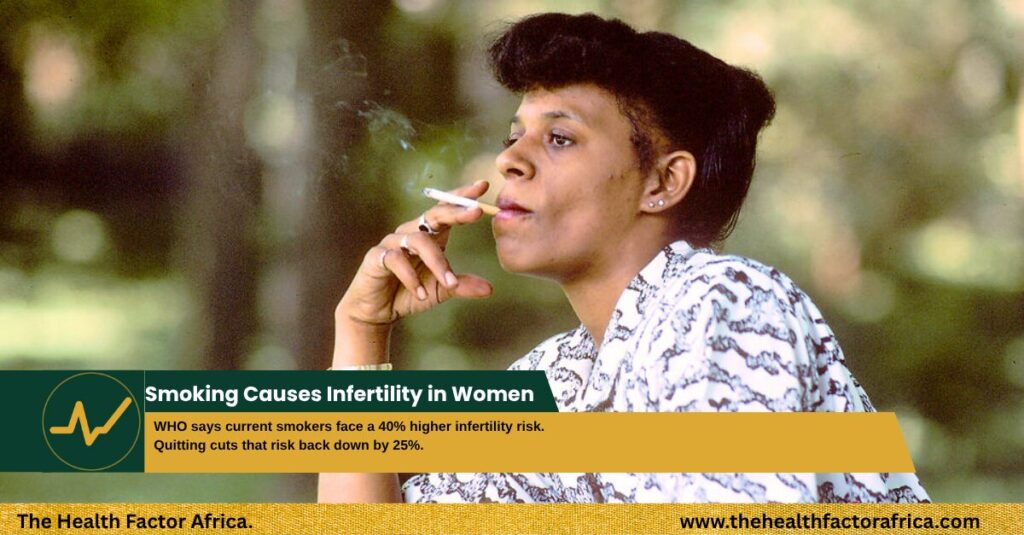
A WHO knowledge summary reviewing evidence from 2000 to 2026 found that women who currently smoke tobacco face a 40% higher risk of infertility compared to non-smokers. The more encouraging finding sits right alongside it: women who had smoked in the past but quit had a 25% lower infertility risk than women who kept smoking, meaning quitting measurably improves reproductive outcomes rather than just halting further damage.
Men aren’t exempt. A review of 44 studies covering more than 60,000 men found smoking linked to reproductive dysfunction including poor sperm quality, absence of sperm in semen, abnormal sperm shape, and sexual dysfunction including erectile dysfunction. Waterpipe smoking (hookah or shisha) was flagged as a similar risk to male fertility specifically. For couples pursuing fertility treatment, cigarette smoking was associated with fewer pregnancies and fewer live births from procedures like IVF, roughly halving success chances in some studies. Even non-smokers face risk: women exposed to second-hand smoke showed higher infertility risk and lower conception chances per cycle. WHO noted evidence on newer products like e-cigarettes and smokeless tobacco is still emerging, while cigarette smoking has the strongest documented link.
Globally, WHO estimates one in six people of reproductive age experience infertility at some point in their lives. The organisation is calling on healthcare providers to routinely discuss tobacco’s reproductive risks with anyone planning pregnancy and to offer consistent, evidence-based quitting support.
What You Can Do
- If you’re trying to conceive and currently smoke, quitting has a measurable, documented benefit, not just a theoretical one. The data shows real risk reduction after quitting.
- Ask your healthcare provider about second-hand smoke exposure, not just your own smoking status, if you’re facing fertility challenges.
- If you’re pursuing fertility treatment, disclose smoking status to your care team honestly. It directly affects treatment success rates.
This article is for general health education and does not replace professional medical advice. If you are struggling with fertility, consult a qualified reproductive health specialist.
The Health Factor Africa
Stay on top of the claims
One email a week: explainers, myth-checks, and the stories behind the headlines.