We recently warned that no herbal remedy can treat stage 4 cancer, after unverified cure offers surfaced around a Nollywood actor’s diagnosis. This week, a US college programme is a useful reminder that taking traditional medicine seriously and rejecting unproven miracle cures are not the same position.
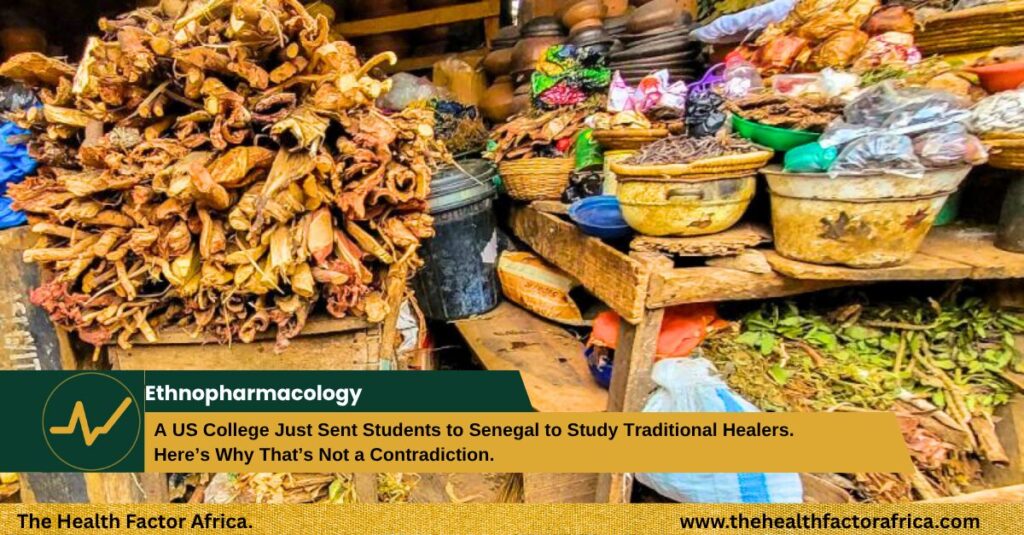
Bryn Mawr College, working with Haverford, runs a “360°” academic cluster sending students to Senegal for three linked courses: botany focused on West African medicinal plants, a course on healing through Senegalese arts and literature, and a history course on colonial medicine and African societies.
Students interview healers, pharmacists, historians, and scientists, and visit medicinal plant markets, traditional hospitals, botanical gardens, and health-focused NGOs. The organising concept is “medical pluralism,” the well-documented reality that African societies routinely navigate multiple healing systems, indigenous, Islamic, and biomedical, side by side rather than one simply replacing another.
Here’s the concrete proof this isn’t naive: Madagascar periwinkle, a plant with deep roots in traditional medicine, is the actual source of vincristine and vinblastine, chemotherapy drugs still used today to treat leukemia, lymphoma, and other cancers. Researchers found them precisely because they took traditional plant knowledge seriously enough to study it rigorously in a lab, isolate the active compounds, and test them properly before anyone claimed they cured anything.
That’s the distinction that actually matters, and it isn’t “traditional versus modern.” It’s whether a remedy has been isolated, tested, and verified, by anyone, anywhere, versus offered on faith to a family in crisis. Vincristine cleared that bar. A free herbal offer to a stage 4 cancer patient with no clinical testing behind it hasn’t.
What You Can Do
• Don’t dismiss traditional medicine broadly. Real, effective drugs, including some cancer treatments, originated in traditional plant knowledge that was later properly studied.
• Do ask one specific question of any remedy, traditional or pharmaceutical: has this actually been tested and verified, not just believed to work?
• Support ethnobotanical and pharmacological research in West Africa. It’s how traditional knowledge and rigorous verification actually meet.
The Health Factor Africa
Stay on top of the claims
One email a week: explainers, myth-checks, and the stories behind the headlines.