We’ve followed this outbreak from a river boat quarantine near Kinshasa, through the moment it passed 2,000 deaths. WHO’s most recent update, published August 14, confirms something we hadn’t yet reported clearly: the single worst week of transmission since the outbreak began happened just last week, and a specific, documented failure appears to explain why this outbreak was allowed to spread undetected for so long in the first place.
The Numbers Now
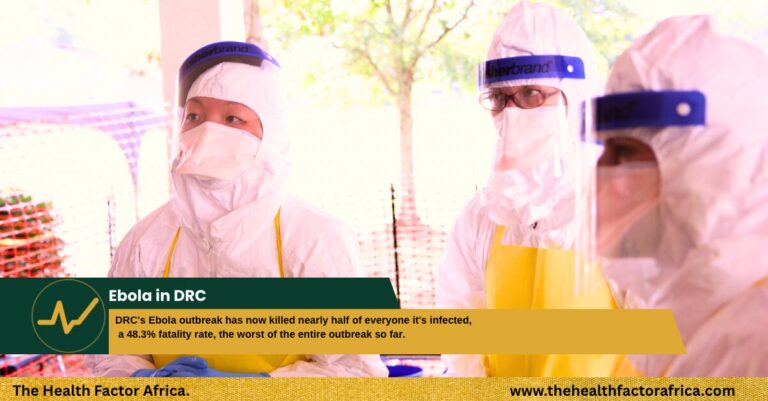
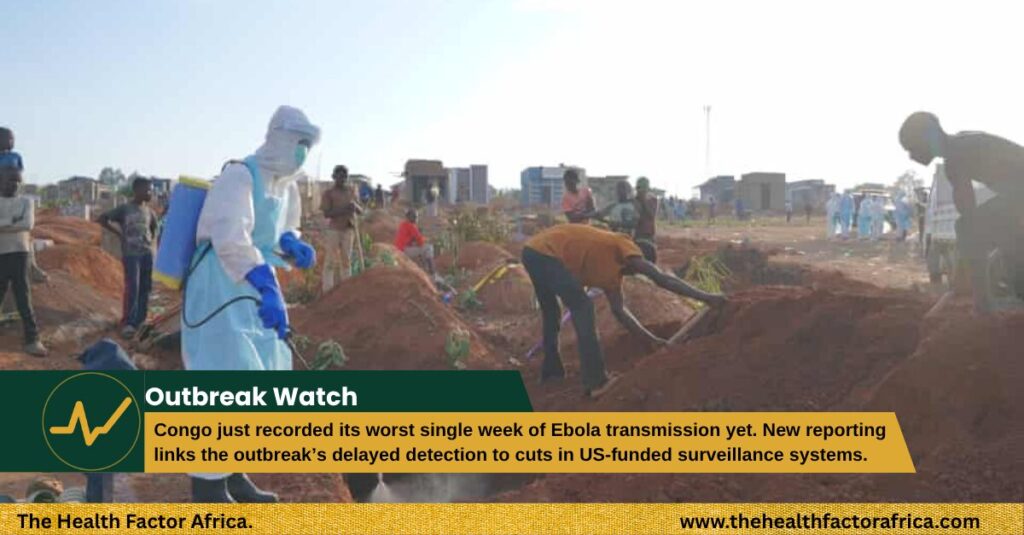
As of August 12, WHO had confirmed 4,665 cases and 2,184 deaths in DRC, a case fatality rate of 46.8%. The most current tracking available, from the European Centre for Disease Prevention and Control, shows the outbreak has kept accelerating since: as of August 15, DRC has recorded 4,945 confirmed cases and 2,325 deaths, meaning roughly 280 new cases and 141 more deaths in just the three days after WHO’s last full report. During the reporting week of August 3 to 9, WHO recorded the highest weekly totals of the entire outbreak: 579 new cases and 304 deaths in a single week, and the days since suggest that pace hasn’t let up. The outbreak has now spread across 54 health zones in six provinces, with Ituri province still accounting for the large majority of all cases.
Why Detection Was Delayed by Months
WHO has now confirmed what earlier reporting suspected: the outbreak likely began circulating in February, a full three months before its official May 15 declaration. Early cases were reportedly mistaken for malaria and typhoid, and initial laboratory testing focused on the more common Zaire strain rather than Bundibugyo.
But newer reporting adds a harder edge to that story. Testimony published by Physicians for Human Rights, from a Congolese doctor working in the affected area, describes how disruptions to USAID funding severely reduced local teams’ ability to conduct proper epidemiological surveillance, in some cases forcing health workers to use their own resources to keep the work going at all. The US CDC and USAID had spent decades building early-detection capacity in Congo, including field epidemiology training, genomic sequencing capability at the National Institute for Biomedical Research, and a functioning health intelligence network. USAID’s mission in Congo closed in 2025. A former senior USAID official told NPR the cuts had seriously weakened the country’s disease-detection infrastructure. Africa CDC Director-General Jean Kaseya has since called for African countries to build sustainable health-security capacity of their own, backed by African governments, international partners, and the private sector, rather than depending on infrastructure that can be withdrawn.
Health Workers Are Dying at an Alarming Rate
As of August 9, at least 155 health workers have been infected during this outbreak, with 45 deaths among them, a 29% fatality rate. WHO points to inconsistent infection prevention and control outside dedicated Ebola treatment centres as a key driver, alongside continued community exposure risk. Since the outbreak was declared a Public Health Emergency of International Concern in May, 12 separate attacks on healthcare facilities have been recorded, further complicating an already difficult response.
Where the Vaccine Effort Stands
There is still no licensed vaccine specifically for Bundibugyo virus. WHO’s Technical Advisory Group has recommended Ervebo, the existing vaccine licensed against the more common Zaire strain, for priority evaluation in a randomized clinical trial in DRC, based on preclinical data suggesting possible cross-protection. WHO’s Director-General was direct about the caveat: there is still no evidence Ervebo works against Bundibugyo in humans, and a vaccine designed specifically for this virus remains the preferred long-term option. Separately, earlier-stage trials of Bundibugyo-specific vaccine candidates are underway with Moderna in Canada and Oxford University in Britain. Gavi, the Vaccine Alliance, has committed $40 million to the response. A separate WHO-sponsored trial, testing a monoclonal antibody treatment alongside the antiviral remdesivir, has enrolled more than 100 patients across three sites in Ituri province.
A Separate Concern in Uganda
Uganda reported two confirmed cases of Crimean-Congo hemorrhagic fever in Yumbe district this month, a different tick-borne viral disease unrelated to the Ebola outbreak, though it emerged just weeks after Uganda declared the end of its own smaller Ebola outbreak on July 29. One patient, a 9-year-old boy, died. Uganda continues heightened surveillance along its border with DRC given the ongoing risk of Ebola cross-border spread.
What Happens Next
WHO’s Emergency Committee meets again on August 18 to reassess the outbreak’s international risk status. Under WHO’s own modelling, the outbreak could peak within six months in a moderate scenario, or continue for nine to twelve months if conditions don’t improve. The response is working to triple treatment bed capacity to 3,000 over the next 12 weeks.
What You Can Do
• If you’re a health worker in an affected region, strict infection prevention protocols matter most outside formal Ebola treatment centres, where WHO says most occupational infections are occurring.
• Don’t treat this as a contained situation. The worst week of transmission so far happened this month, not earlier in the outbreak.
• Follow the August 18 Emergency Committee outcome for the next official assessment of international risk.
• Support calls for sustainable, locally-controlled surveillance capacity. This outbreak’s delayed detection is now directly linked to the loss of external funding for systems that took decades to build.
The Health Factor Africa
Get Outbreak Watch in your inbox
New outbreaks, new data, sent the moment we publish.