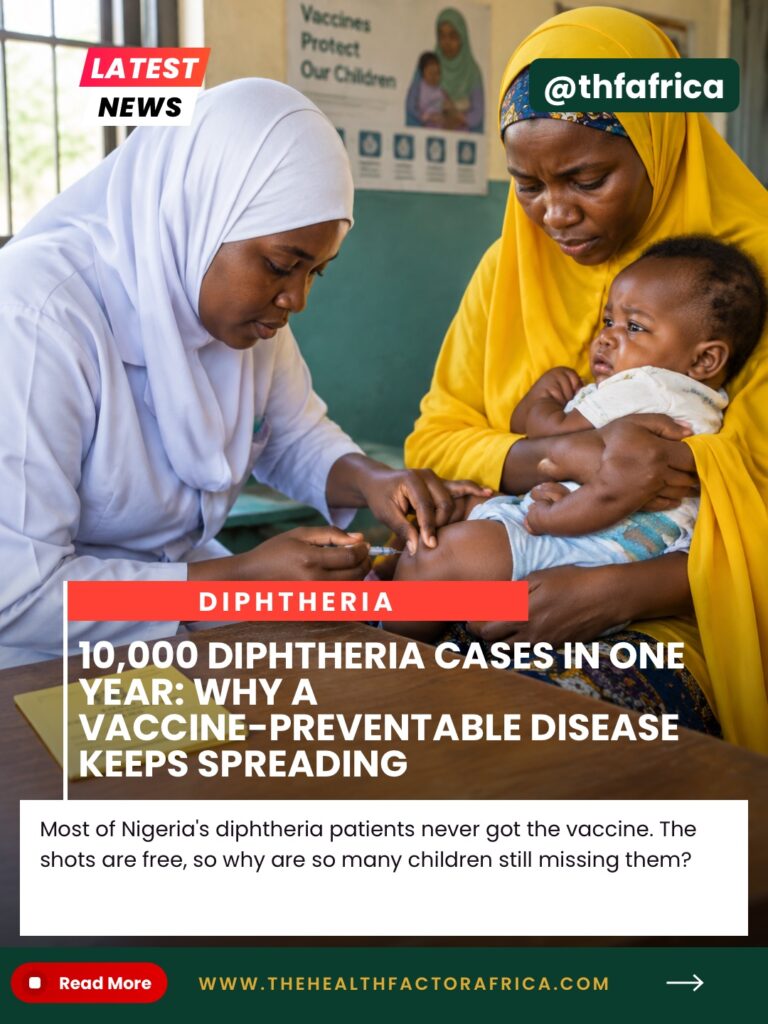
In Kano, health workers have a name for the children who worry them most: zero-dose. These are children who have never received a single routine vaccine. They are also the children diphtheria keeps finding.
Nigeria had recorded more than 10,000 confirmed diphtheria cases in 2026 by late August, according to NCDC, with Kano, Borno and Bauchi carrying the heaviest burden. Deaths have since been reported in Plateau, Niger, Kano and Katsina. Niger State alone counted 17 deaths this year.
Why it keeps spreading
Diphtheria is an old disease with an old solution. NCDC says about 68 percent of confirmed cases were in people who were not vaccinated. In Kano, the state disease control agency says more than 16,000 of its 32,000 confirmed cases since late 2022 were zero-dose children, and it estimates the state needs about nine million vaccine doses to close the gap.
The reasons are familiar: vaccine hesitancy, insecurity that keeps health workers out of some communities, displaced families, and clinics that are simply too far. Virologist Prof. Oyewale Tomori has said that finding unvaccinated children aged five, seven or eleven means the system did not do its job.
What parents can do
Diphtheria often starts like a sore throat with fever. Then a thick grey coating can form in the throat and block breathing. It spreads through coughs and close contact, and it can damage the heart.
The protection is free. The diphtheria vaccine is part of the routine pentavalent shots given at 6, 10 and 14 weeks at government primary health centres. If your child missed any doses, it is not too late to catch up. Take the immunisation card, or just the child, to the nearest PHC and ask.
Older children and adults who were never vaccinated can also be protected. Ask a health worker.
This article is for general information and is not a substitute for professional medical advice.
The Health Factor Africa
Get verified health news, free
One email a week: explainers, myth-checks, and the stories behind the headlines.
Work in health policy, government or an NGO? Get the monthly Policy Brief instead.