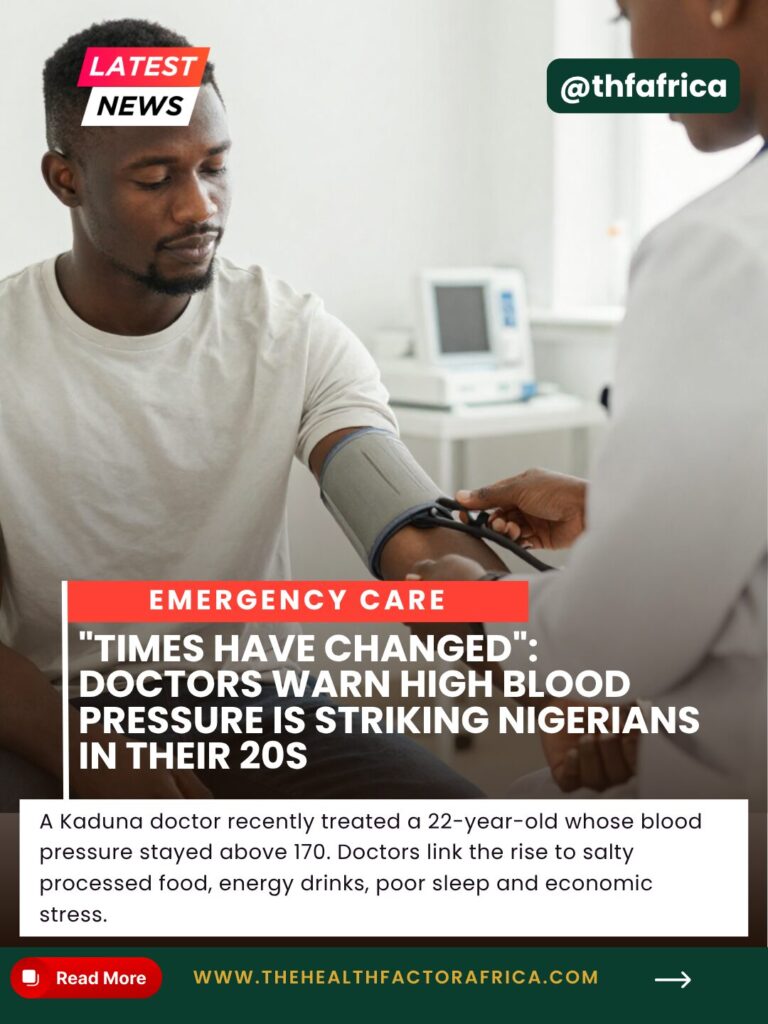
High blood pressure is no longer just an older person’s disease in Nigeria, doctors warn.
Dr Sheyin David Madaki, a former chairman of the Nigerian Medical Association in Kaduna State, told Leadership he recently saw a 22-year-old whose blood pressure stayed above 170 on repeated checks. Normal is below 120/80.
“But times have changed. Environments have changed. Lifestyle has changed,” he said.
What’s driving it
Doctors point to:
- Too much salt, fast food and processed meals
- Soft drinks and energy drinks
- Too few fruits and vegetables
- Weight gain and too little exercise
- Poor sleep (adults need seven to nine hours)
- Stress from unemployment, low pay and rising living costs
A silent killer
At least 40 percent of Nigerian adults have hypertension, according to the Federal Ministry of Health and Social Welfare’s 2025 State of Health of the Nation report. Awareness and treatment remain low.
Hypertension often has no symptoms. Some young patients only find out they have it when their kidneys start to fail. Left uncontrolled, it can cause stroke, heart failure, blindness and sudden death.
Emmanuel, 26, who lives with hypertension, told Leadership that managing it takes a physical, emotional and financial toll.
What to do
- Check your blood pressure at least once a year, even if you feel fine. Many pharmacies do it cheaply.
- Cut salt. Go easy on seasoning cubes, salty snacks and processed food.
- Move more, keep a healthy weight, limit alcohol and don’t smoke.
- Protect your sleep. Less screen time at night helps.
- If you’re on medication, don’t stop just because your readings return to normal. “The medicine is what is keeping it normal,” Madaki warned.
The Health Factor Africa
Get verified health news, free
One email a week: explainers, myth-checks, and the stories behind the headlines.
Work in health policy, government or an NGO? Get the monthly Policy Brief instead.