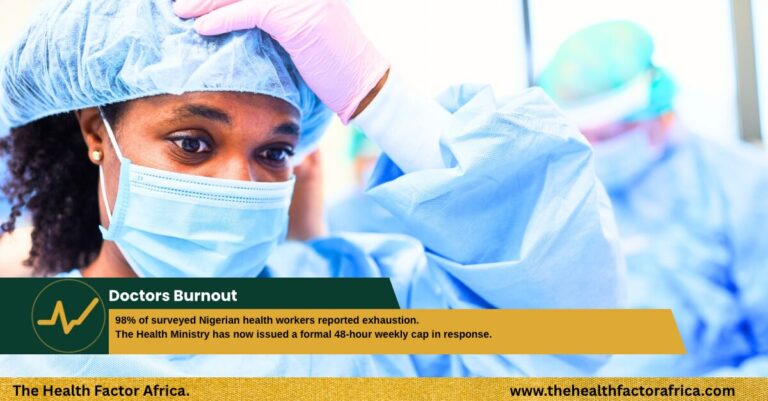
We’ve spent weeks documenting Nigeria’s doctor shortage, from neurosurgeons considering emigration to a health worker ratio far below WHO’s benchmark. This week, African health ministers formally adopted a continent-wide response. Buried inside it is a detail that complicates the story we thought we knew.
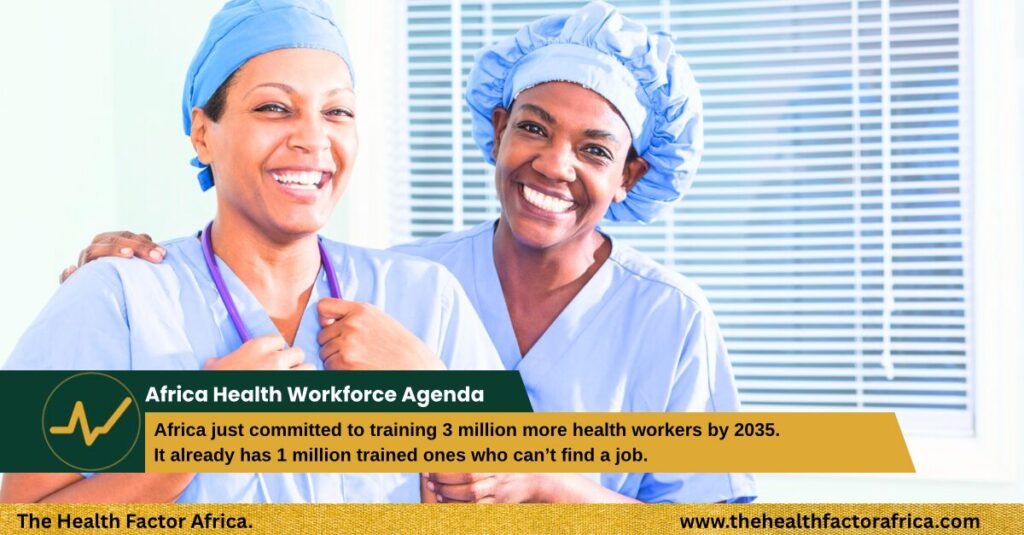
Ministers meeting in Addis Ababa endorsed the Africa Health Workforce Agenda 2026-2035, committing to plan, educate, employ, and retain 3 million additional health workers by 2035. The scale of need is real: the region’s workforce reached an estimated 5.72 million in 2024, but that’s still only about 46% of what Africa actually needs, and without action the shortfall could exceed 6 million workers by 2035.
Here’s the part that reframes the usual “not enough doctors” narrative: WHO says an estimated 1 million trained health professionals across Africa are currently unemployed, with new graduates hit hardest. In several countries, more than half of newly qualified nurses, doctors, and midwives can’t find work soon after graduating. The problem isn’t purely a training gap, it’s that education, job creation, and financing haven’t been built to work together. Countries have been producing health workers faster than their health systems can afford to hire them.
The Agenda’s economic case is direct: closing the gap needs roughly $4 to $6 in additional investment per person per year, but WHO estimates every dollar invested in the health workforce generates up to $10 in economic return and around 30 times its value in broader social benefit. WHO Regional Director Dr. Mohamed Janabi called it a shift from simply training more workers to building the “opportunities, support and conditions” that let them actually stay and serve where needed.
What You Can Do
• If you’re a newly qualified Nigerian health worker struggling to find employment, know this is a documented, continent-wide pattern, not an individual failure, and it’s now an explicit policy target for reform.
• Watch whether Nigeria’s own employment pipeline changes, not just training numbers. This Agenda’s stated success measure is jobs and retention, not degrees issued.
The Health Factor Africa
Want the Policy Brief version?
Every explainer gets a shorter, policy-focused brief in your inbox — built for people who need the decision-relevant version fast.