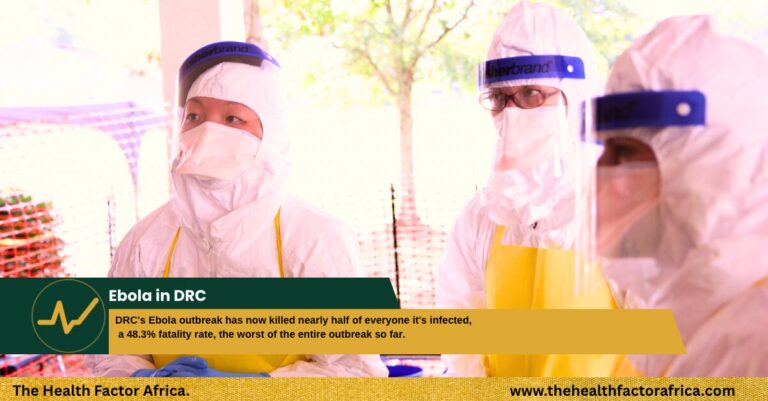
We’ve spent recent weeks tracking an Ebola outbreak in the Democratic Republic of Congo caused by a virus strain, Bundibugyo, for which there is currently no approved vaccine or treatment. That gap is precisely the kind of problem one global organization exists to close. This week, that organization named a Nigerian to lead it.
Who’s Taking the Job
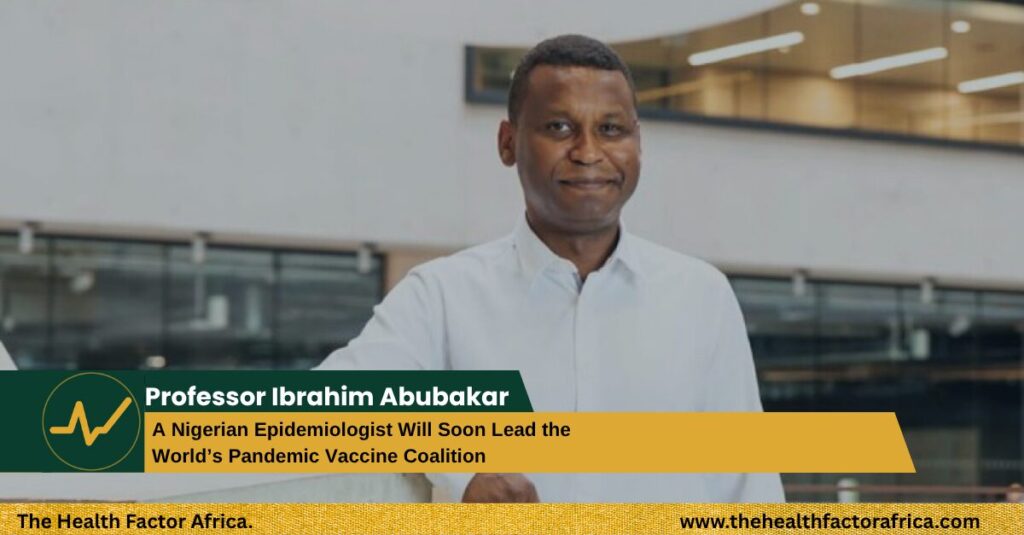
The Board of the Coalition for Epidemic Preparedness Innovations (CEPI) has appointed Professor Ibrahim Abubakar as its next Chief Executive Officer, following an open recruitment process. Abubakar is a medical graduate of Ahmadu Bello University in Nigeria who went on to build a career spanning academia, health policy, and infectious disease control internationally. He currently serves as Vice-Provost (Health) and Professor of Infectious Disease Epidemiology at University College London, having previously directed the UCL Institute for Global Health and served as Dean of the Faculty of Population Health Sciences. His record also includes leading the Lancet Nigeria Commission and advising Nigeria’s own Presidential Taskforce, giving him direct, hands-on experience with Nigerian public health policy alongside his international academic career.
What CEPI Actually Does
CEPI is a partnership between public, private, philanthropic, and civil organisations with a specific mission: accelerating vaccine and biologic countermeasure development against epidemic and pandemic threats, so they reach people who need them rather than sitting undeveloped when an outbreak hits. Since its founding, the coalition has supported more than 50 vaccine candidates and platform technologies against known high-risk pathogens and unknown future threats. Its flagship goal, known as the “100 Days Mission,” aims to compress the time needed to develop a safe, effective, globally accessible vaccine against a new threat down to just 100 days, a target directly relevant to outbreaks like the one currently unfolding in DRC.
The Timing
Abubakar will formally join CEPI in March 2027 and take over as CEO in April 2027, succeeding Dr. Richard Hatchett, who has led the organisation since its founding in 2017. The board has structured a managed transition period rather than an abrupt handover. Abubakar’s tenure will begin by implementing CEPI’s 2027–2031 strategy. In his own words on taking the role, he said there is “an opportunity to build on that progress” CEPI has made over the past decade.
Why This Lands Differently Against This Year’s Headlines
We’ve spent this year covering Nigeria’s brain drain from more than one angle: a president personally appealing for diaspora doctors to return, a neurosurgeon who had to abandon her specialty to practice in the US, and a newer push toward “ethical health worker mobility” rather than simple repatriation. This appointment sits alongside that conversation as something more straightforwardly positive: a Nigerian-trained physician reaching the top of one of global health’s most consequential institutions, using exactly the kind of international platform those debates are often about losing.
What Nigeria Actually Gets From This
It’s worth being precise here. This is a personal career achievement for Abubakar and a UK- and Norway-based international body, not a Nigerian institutional appointment, and it doesn’t come with direct funding or infrastructure for Nigeria’s own health system. President Tinubu’s official congratulations framed it as recognition of Nigeria’s growing influence in global health leadership, which is a fair, if largely reputational, read. The more concrete potential upside is longer-term: a Nigerian in this specific seat may mean African outbreak contexts, like the one CEPI’s own mission is designed to respond to, get engaged with a level of firsthand familiarity that’s been missing at this level before.
What You Can Do
• Follow CEPI’s 2027–2031 strategy as it’s published. It will shape global vaccine development priorities for the next Ebola, the next unknown pathogen, and beyond.
• Watch whether this appointment translates into deeper CEPI engagement with African outbreak response specifically, rather than treating it as a symbolic milestone alone.
The Health Factor Africa
Get Outbreak Watch in your inbox
New outbreaks, new data, sent the moment we publish.