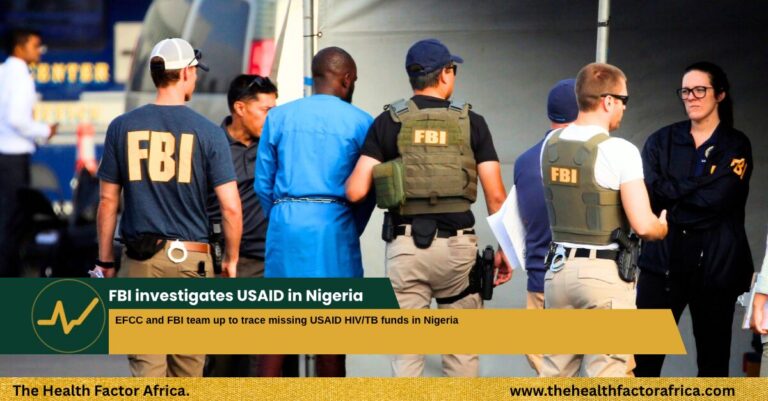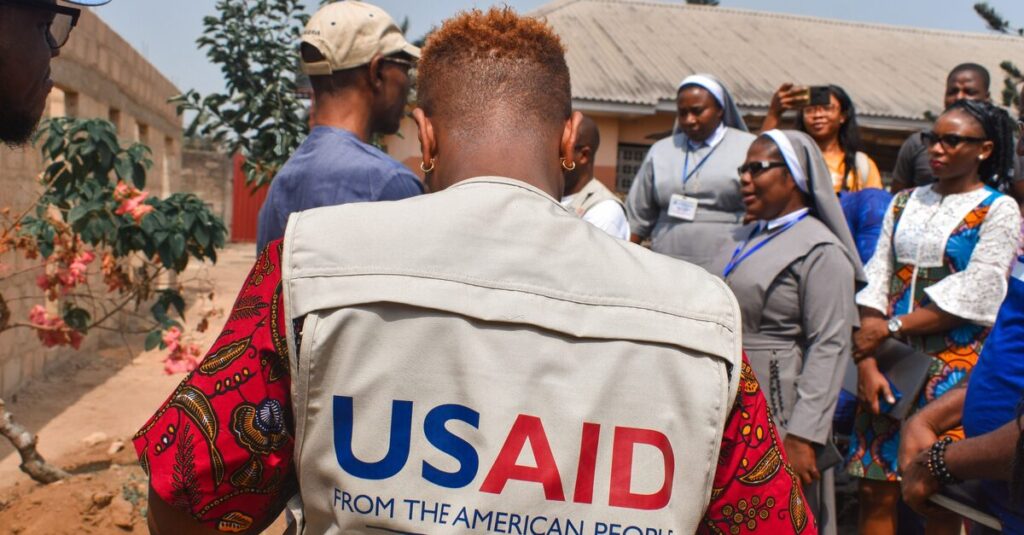
We recently covered Kenya’s $2.5 billion health deal with the US. It turns out that’s one of 34. After dissolving USAID, withdrawing from the WHO, and cutting foreign health assistance over the past year, the US is now finalizing bilateral agreements under its “America First Global Health Strategy” — and Nigeria’s is among the biggest and most demanding of them all.
What These Agreements Actually Are
The new memoranda of understanding (MOUs) replace the old aid model — where USAID funded NGOs directly — with a structure where partner governments themselves take on a growing share of health costs, while US funding tapers down. As of August 3, 34 countries had signed on, governing spending from 2026 to 2030, totaling at least $24.2 billion, with recipient governments expected to cover roughly 40% of that overall.
Nigeria’s Specific Deal
Nigeria’s package is one of the three largest signed so far, alongside Tanzania’s and Kenya’s. Nigeria has pledged to fund 59% of its MOU’s total spending — around $3 billion in domestic cofinancing. But here’s the catch analysts at Think Global Health flagged: despite that scale of commitment, Nigeria’s health spending is projected to rise only marginally as a share of its national budget, from roughly 5% in the 2025 proposed budget to at least 6% between 2026 and 2030 — nowhere near the 15% African governments pledged in the 2001 Abuja Declaration (actual average across the continent sits around 7% today).
More concerning: Nigeria is one of five countries — alongside Cameroon, Liberia, South Sudan, and Uganda — whose committed domestic health spending under the MOU outpaces independent projections (from the Institute for Health Metrics and Evaluation) of how fast its health budget can realistically grow. That gap matters because it raises the question of where the extra money is actually meant to come from — other donors, or other parts of the national budget.
What’s Quietly Losing Priority
Across the 34 agreements broadly, HIV/AIDS and maternal and child health remain consistent priorities. But malaria — historically the second-largest recipient of US health assistance — and tuberculosis are notably absent from many agreement texts and press releases altogether, even in countries where these diseases still cause significant premature death. Non-communicable diseases, responsible for more than 30% of premature deaths across partner countries, receive no meaningful mention in the available texts at all.
The One Clear Bright Spot
There’s a genuine win buried in here: lenacapavir, a twice-yearly injectable shown to be nearly 100% effective at preventing HIV, is being scaled up through a US-Gilead-Global Fund partnership, with the target raised from 2 million to 3 million people reached by 2028. Nigeria has already begun receiving and implementing the drug — notably, even though lenacapavir isn’t mentioned anywhere in Nigeria’s own MOU text, showing that access isn’t strictly tied to what’s written into these agreements.
Why This Connects to What You’ve Already Seen
We’ve previously covered stock-outs of test kits and medicines documented by Nigerian civil society groups, and the doctor shortage driving brain drain. This financing structure is part of why those pressures may not ease soon: when a government’s cofinancing obligations outpace realistic budget growth, something in the system typically absorbs the strain — often the same stock levels, staffing, and infrastructure gaps patients already feel at the point of care
.
What You Can Do
• Watch domestic health budget announcements closely, not just MOU headlines — the real test is whether Nigeria’s allocated share actually reaches 6%+ and stays there.
• Don’t assume a drug or programme is unavailable just because it’s not mentioned in these agreements. Lenacapavir’s rollout shows implementation can move independently of the text.
• Support transparency and civil society tracking of how cofinancing commitments translate into actual facility-level resources — this is exactly the kind of gap community-led monitoring efforts are designed to catch.
The Health Factor Africa
Want the Policy Brief version?
Every explainer gets a shorter, policy-focused brief in your inbox — built for people who need the decision-relevant version fast.