Picture a labour ward at 2am. The doctor says the baby must come out by surgery, now. Then comes the second shock: the bill. For many Nigerian families, that moment has meant borrowing, begging or being stuck in hospital until someone pays.
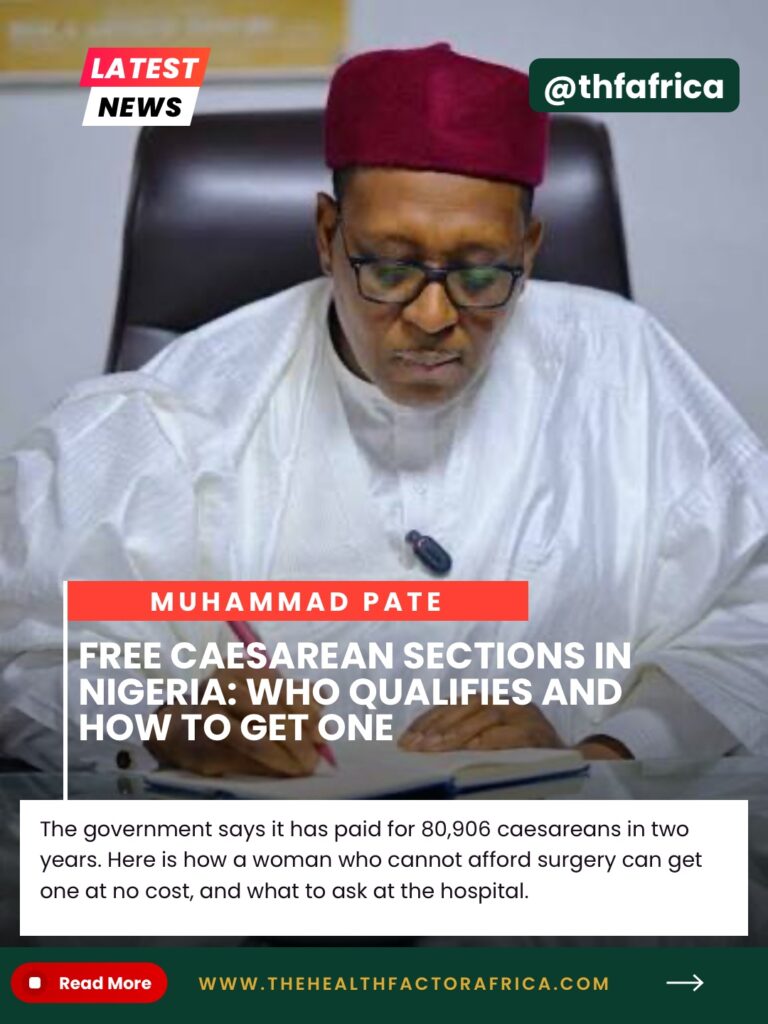
There is now another option. On November 10, Coordinating Minister of Health Muhammad Pate told the Joint Annual Review in Abuja that the federal free emergency obstetric care programme has paid for 80,906 caesarean sections in two years, alongside about 9,100 newborn services and 6,059 fistula repairs. He said deaths from obstetric emergencies fell 22% in participating facilities.
Who qualifies
The programme is for women who cannot afford the surgery. The hospital’s social welfare team assesses the family, and if you qualify, the caesarean costs you nothing. In Bauchi, Nigeria Health Watch found the cover also includes blood transfusion and newborn resuscitation.
What you need
Your National Identification Number (NIN). NHIA says it can be shown before or after admission, and there is no separate registration.
Where
NHIA says the programme started in over 100 federal, state, private and faith-based hospitals across all six geopolitical zones, with more waiting for approval. If you are not sure your hospital takes part, ask at antenatal clinic: “Is this hospital part of the NHIA free caesarean programme?” Ask early, not on the night of the emergency.
What the numbers don’t show
The 22% drop covers participating facilities only, not the whole country. Officials also admit gaps, including too few skilled health workers. In Bauchi, officials have heard reports that some remote facilities still charge patients despite the zero billing rule. If you are asked to pay after being found eligible, ask for the social welfare unit and write down names.
If you or someone you love is pregnant and money is tight, this is worth knowing before the day comes.
This article is for general information and is not a substitute for professional medical advice.
The Health Factor Africa
Get verified health news, free
One email a week: explainers, myth-checks, and the stories behind the headlines.
Work in health policy, government or an NGO? Get the monthly Policy Brief instead.