We’ve followed this outbreak from a river boat scare near Kinshasa, past 2,000 deaths, through its worst single week yet. WHO’s 100-day update, released this week, is the clearest picture so far of where things actually stand, and it’s more complicated than “getting worse” or “getting better.”
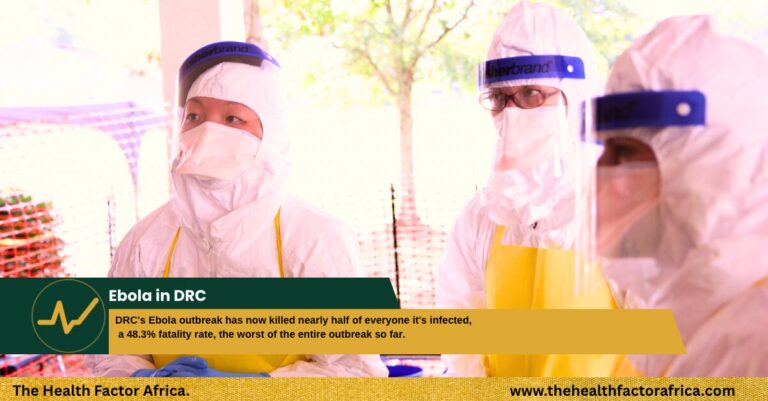
The numbers: more than 5,200 cases recorded since the outbreak was declared in May, with a daily average of roughly 90 confirmed cases over the first three months, a faster pace than either the 2014-2016 West Africa outbreak or DRC’s own 2018-2020 outbreak recorded at the same stage. Transmission has now spread to a sixth province, though Ituri remains the epicentre, accounting for 85% of cases and 79% of deaths.
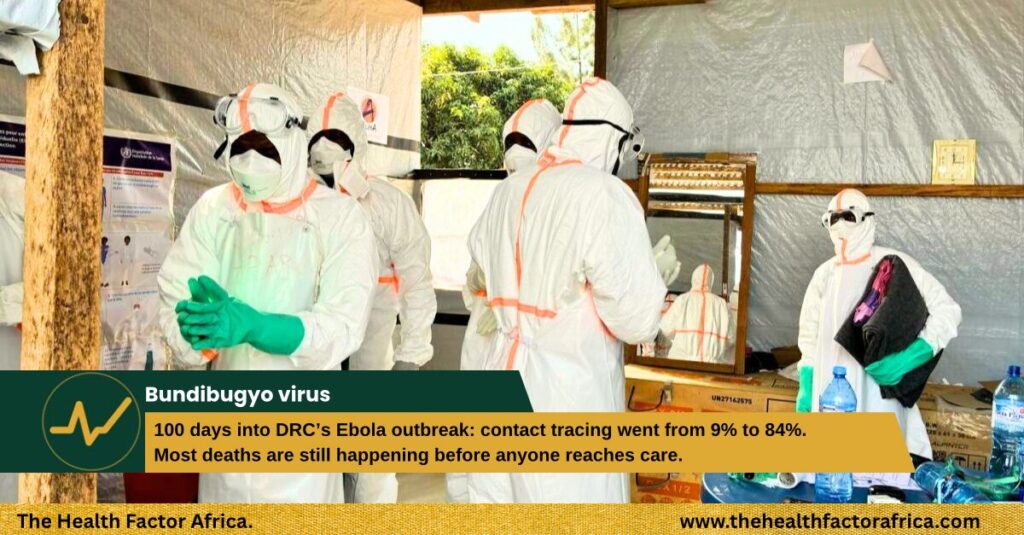
The most telling detail in the update isn’t a case count. Over the past six weeks, roughly 60% of the outbreak’s 260 weekly deaths happened in the community, outside any Ebola treatment centre, meaning people are dying before they’re ever reached by care. That points squarely at the same gap we flagged before: early detection and referral, not treatment capacity alone, remains the unsolved problem.
Because the response genuinely has scaled up. Laboratory capacity grew from a single testing site to 19 labs processing over 3,000 samples daily. Treatment beds went from fewer than 10 to more than 1,300. Contact tracing follow-up, arguably the single best measure of whether a response is keeping pace with transmission, improved from just 9% in the outbreak’s first week to 84% as of August 18. The first emergency-listed molecular diagnostic test built specifically for Bundibugyo virus has now been deployed.
WHO Regional Director Dr. Mohamed Janabi called this a “defining moment,” warning that the progress made proves stronger action works, but that incremental gains alone won’t be enough to end the outbreak. Conflict, population displacement, attacks on health facilities, and difficult access remain active obstacles to reaching the people who need care most.
What You Can Do
• Don’t read this as either “under control” or “hopeless.” Both the outbreak’s growth rate and the response’s scale-up are real, and the outcome still depends on what happens in the next few months.
• If you’re in or near affected provinces, seek care at the first sign of symptoms rather than waiting. The data shows delayed access, not lack of treatment capacity, is now the bigger risk.
The Health Factor Africa
Get Outbreak Watch in your inbox
New outbreaks, new data, sent the moment we publish.