Who is actually watching?
The main body responsible is the Nigeria Centre for Disease Control and Prevention — the NCDC. Think of them as the country’s disease early-warning system. When a strange cluster of illnesses appears anywhere in Nigeria, it’s the NCDC, working with state health teams, the Federal Ministry of Health, and partners like WHO and UNICEF, that investigates, tests, and coordinates the response [NCDC, 2026].
The NCDC’s Director-General put it in a way worth remembering: “Preparedness is not defined by the absence of outbreaks, but by the capacity to anticipate risk, detect threats early… and respond in a timely, equitable, and evidence-driven manner” [NCDC, 2026]. In plain terms: you can’t stop every outbreak from starting, but you can be ready to catch it fast — and speed is everything.
Why speed matters so much
Almost every deadly outbreak has the same weak point: the beginning. A disease caught in its first days, in one village, can be contained. The same disease left to spread quietly for two weeks becomes a regional emergency.
That’s why early detection is the whole game. And here’s the part most people don’t realise: the system depends on ordinary people noticing and reporting. A nurse who flags an unusual cluster, a community leader who reports several sudden deaths, a parent who takes a sick child in early — these are often the true first line of defence, long before any lab is involved.
This is where you come in
You don’t need to be a doctor to be part of Nigeria’s outbreak defence. The NCDC runs free public channels for anyone to report a suspected outbreak or ask for health guidance:
• Toll-free line: 6232
• WhatsApp: +234 708 711 0839
• SMS: +234 809 955 5577
[NCDC, 2026]
If you notice something worrying in your community — several people falling sick with the same symptoms, unexplained deaths, a spike in severe diarrhoea, or signs of a disease like measles or diphtheria spreading — you can report it. Early reports save lives.
What you can do to strengthen the defence
• Report early, don’t wait. A cluster of similar illnesses is worth flagging, even if you’re not sure. Better a false alarm than a missed outbreak.
• Keep immunisations up to date. Many of the diseases circulating now — measles, diphtheria — are vaccine-preventable. A well-vaccinated community is one an outbreak struggles to spread through.
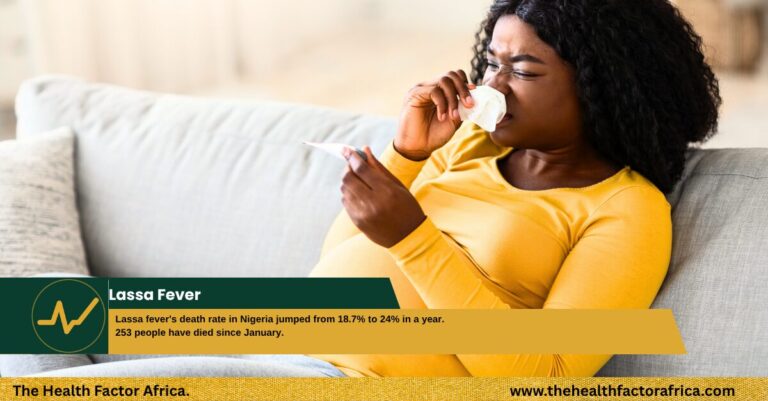
• Practise the basics. Clean water, handwashing, safe food, and covered storage stop cholera and Lassa fever at the source.
• Trust verified information. During an outbreak, rumours spread faster than the disease. Follow the NCDC and credible health sources — not WhatsApp forwards from unknown senders.
The bigger picture
Nigeria’s outbreak-defence system isn’t perfect, and it works under real strain — funding pressures, a stretched health workforce, and the added weight of climate shocks and displacement [NCDC, 2026]. But it exists, it works, and it gets stronger every year.
And its most powerful sensor isn’t a laboratory or a satellite. It’s an alert, informed public. When you know the signs, keep your family vaccinated, and know the number to call, you become part of the very system that keeps the whole country safer.
you notice something worrying in your community — several people falling sick with the same symptoms, unexplained deaths, a spike in severe diarrhoea, or signs of a disease like measles or diphtheria spreading — you can report it. Early reports save lives.
The Health Factor Africa
Get Outbreak Watch in your inbox
New outbreaks, new data, sent the moment we publish.